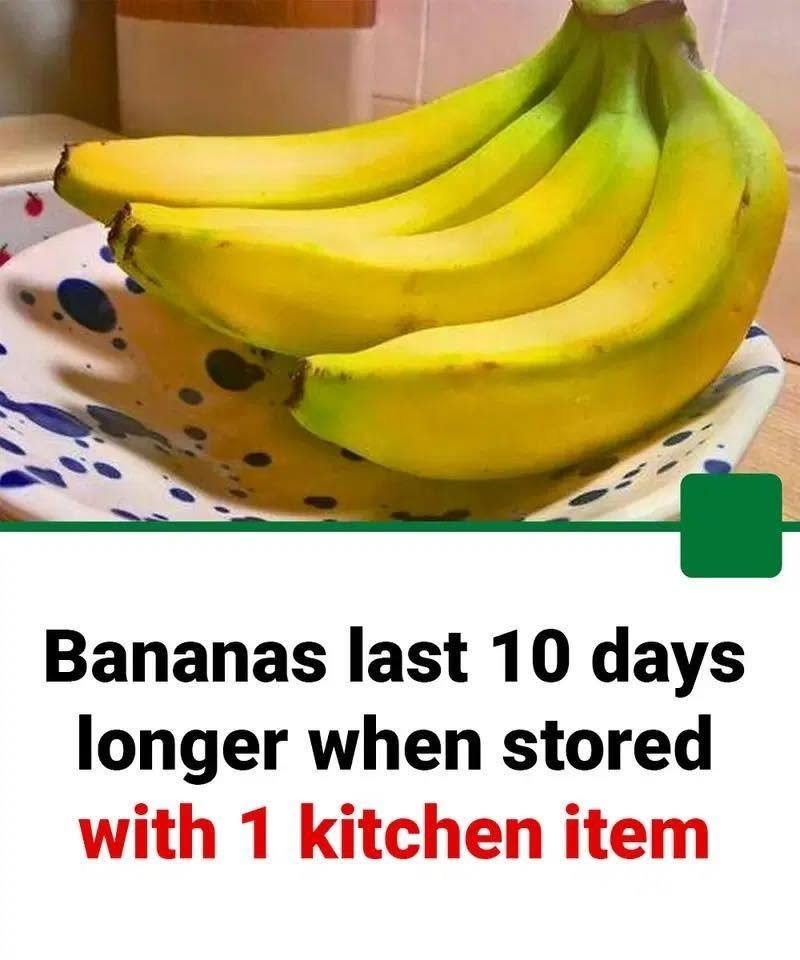
Bananas Last 10 Days Longer When Stored with One Kitchen Item Instead of in a Fruit Bowl
Bananas are one of the easiest fruits to buy and one of the most frustrating to store. They can look perfectly yellow one day and suddenly develop brown spots, soften, and become overripe soon afterward.
A simple change in how you store them can slow that process. One inexpensive kitchen item can help reduce the effect of ethylene gas around the fruit and protect bananas from some of the conditions that make them ripen faster.
The trick is simple: use a banana hanger or hook instead of leaving the bananas sitting in a fruit bowl.
It won’t magically make bananas last exactly 10 days longer, because ripening depends on temperature, how ripe the bananas were when purchased, and the surrounding fruit. But hanging them can help them stay usable longer.
Why Bananas Ripen So Quickly
Bananas naturally produce ethylene, a plant hormone that promotes ripening. As bananas ripen, they produce more ethylene, which can accelerate further ripening.
When a bunch sits in a fruit bowl, several things can happen at once:
- Bananas may touch other ripe fruit.
- The fruit can rest against the bowl, creating bruised areas.
- Warm room temperatures can speed ripening.
- Ethylene can accumulate around nearby produce.
- Pressure from the weight of the bunch can damage the skin.
None of this means a fruit bowl is inherently bad. It simply isn’t always the best environment for keeping bananas firm for as long as possible.
The Simple Kitchen Item That Helps
A banana hanger or sturdy kitchen hook allows the bananas to hang freely rather than rest on a surface.
This can help by:
1. Reducing Pressure and Bruising
When bananas sit in a bowl, parts of the fruit are constantly touching the bowl or other produce.
Hanging the bunch reduces those pressure points. Less bruising can mean fewer areas that soften rapidly.
2. Improving Airflow
Hanging the bananas separately allows air to circulate around more of the peel.
Good airflow doesn’t stop ripening, but it can help avoid some of the warm, crowded conditions that encourage deterioration.
3. Keeping Bananas Away From Other Ripe Fruit
Apples, pears, avocados, peaches, and other ripening fruits can also release ethylene.
Keeping bananas separate from particularly ripe fruit can reduce exposure to additional ethylene and may help slow the overall ripening process.
Where You Put the Hanger Matters
The hanger itself isn’t the whole solution.
Keep bananas in a cool, dry area away from direct sunlight and heat-producing appliances.
Avoid placing them directly beside:
- A stove
- An oven
- A sunny window
- A radiator or heater
- A warm appliance
- Very ripe fruit
Room temperature is generally appropriate while bananas are still ripening.
What About the Refrigerator?
Refrigeration can be useful once bananas have reached the ripeness you want.
Putting an unripe banana in the refrigerator can interfere with normal ripening and cause the peel to darken. However, a ripe banana can often be refrigerated to slow further softening.
Don’t be alarmed if the peel becomes darker in the refrigerator. The skin can turn brown or nearly black while the edible fruit inside remains reasonably firm.
For the best results, let bananas reach your preferred ripeness first and then refrigerate them if you want to slow further ripening.
Another Popular Trick: Covering the Stems
You may have seen people wrapping the stems of a banana bunch with plastic wrap.
The idea is to reduce the movement of ethylene gas from the stem area. Some people find that this modestly extends the useful life of their bananas.
However, it isn’t a miracle method.
If you want to try it, the bigger storage principles still matter: keep the bananas away from heat, avoid bruising them, and separate them from very ripe fruit.
Don’t Separate the Bananas Too Early
There is no universal rule that bananas must remain attached to the bunch.
If you’re trying to slow ripening, however, keeping the bunch intact and hanging it can be a convenient approach.
Once individual bananas become ripe, separating them can make it easier to use them at different times and prevent one damaged banana from affecting the others.
The 10-Day Claim Needs a Reality Check
The idea that a banana hanger will make bananas last exactly 10 days longer is too specific.
Storage methods can influence how quickly bananas ripen, but there is no guaranteed number of extra days for every bunch.
A banana purchased already very ripe will behave differently from one that is still green. Temperature, humidity, handling, variety, and storage conditions all matter.
So think of the hanger as a simple ripening-management technique, not a guarantee that every bunch will last an additional 10 days.
How to Keep Bananas Fresh as Long as Possible
For a simple routine:
- Hang the bananas rather than letting the bunch sit in a bowl.
- Keep them away from heat and direct sunlight.
- Separate them from very ripe fruit.
- Handle them gently to minimize bruising.
- Let them ripen at room temperature.
- Refrigerate ripe bananas if you want to slow further softening.
- Use very ripe bananas creatively in smoothies, oatmeal, pancakes, or baked foods rather than throwing them away.
What Not to Do
Avoid storing bananas in a tightly sealed container while they’re ripening. Trapping moisture and gases around the fruit isn’t generally helpful.
Also avoid placing bananas on top of or directly beside hot appliances. Heat can accelerate ripening considerably.
And don’t rely on appearance alone to decide whether a banana is spoiled. Brown spots on the peel commonly indicate ripening. But if the fruit has an unusual smell, visible mold, leaking liquid, or other clear signs of spoilage, it’s better to discard it.
Final Takeaway
The simplest upgrade may be to get bananas out of the fruit bowl and hang them from a banana hanger or suitable kitchen hook.
Hanging can reduce bruising, improve airflow, and keep bananas separated from other ripening fruit. Combined with keeping them away from heat and refrigerating them once ripe, it can help you get more usable time from a bunch.
The exact “10 extra days” isn’t guaranteed, but the basic principle is sound: better storage conditions can slow the ripening process and reduce unnecessary food waste.
