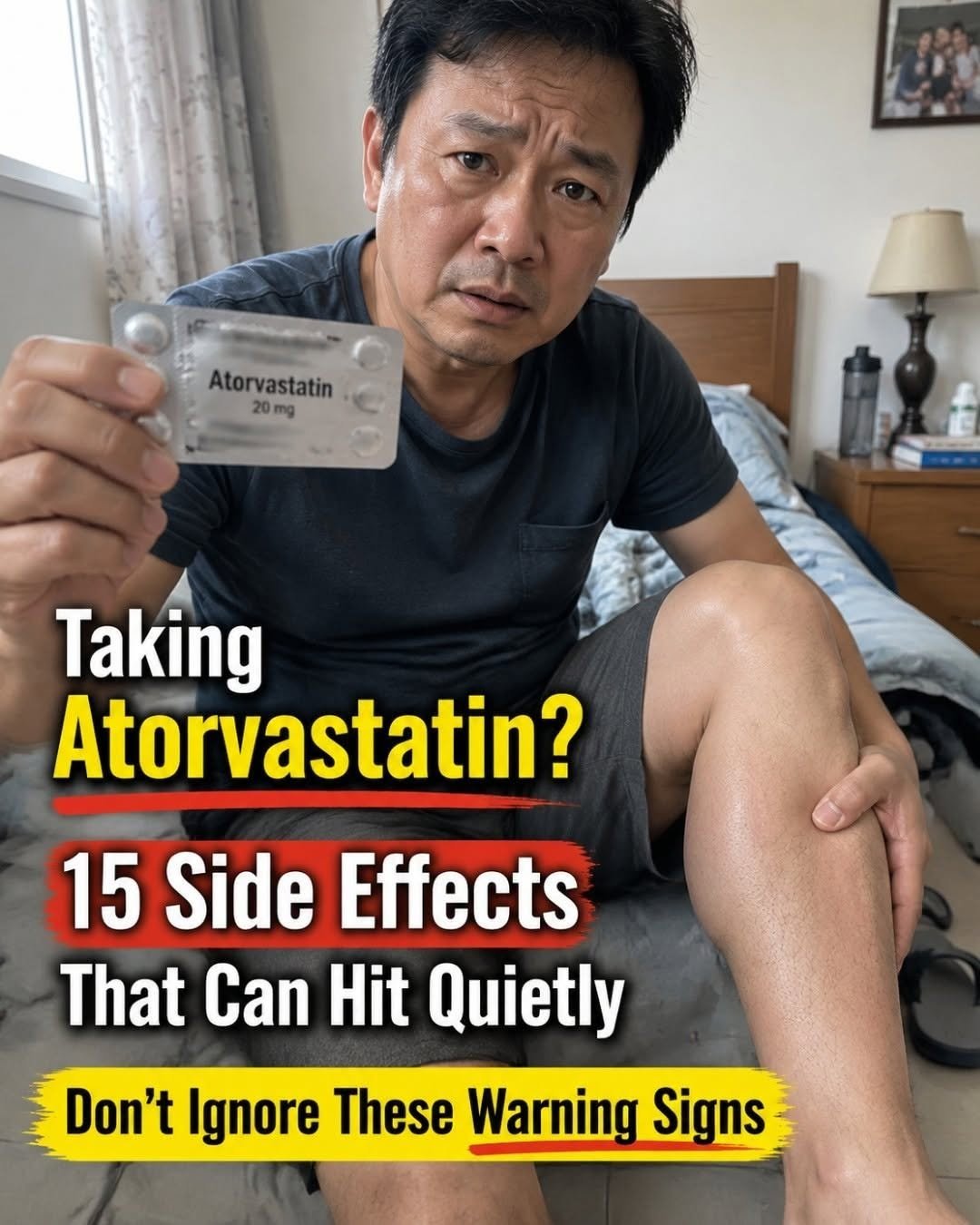
Taking Atorvastatin? Could These 15 Subtle Side Effects Be Affecting You?
Atorvastatin is one of the most widely used cholesterol-lowering medicines. It belongs to a group of medicines called statins and is prescribed to lower LDL cholesterol and reduce the risk of cardiovascular events such as heart attacks and strokes.
Like any medicine, atorvastatin can cause side effects. Most are mild, and many people have no significant problems while taking it. Some symptoms can also have causes unrelated to the medicine, so it is important not to automatically blame atorvastatin whenever something feels different.
Here are 15 symptoms or changes that may be worth discussing with a healthcare professional if they appear after starting atorvastatin or after a dose change.
1. Muscle Aches
Muscle discomfort is one of the side effects people commonly associate with statins.
You might notice aching, soreness, or tenderness in the muscles, sometimes without having done anything particularly strenuous.
The discomfort can occur in different parts of the body and may be mild.
Persistent or unexplained muscle pain should be discussed with a healthcare professional rather than simply stopping the medicine yourself.
2. Muscle Weakness
Some people report feeling weaker than usual while taking a statin.
Ordinary tiredness after activity is different from unexplained muscle weakness. New weakness that interferes with everyday activities deserves attention, particularly if it occurs together with muscle pain.
Rarely, statins can cause significant muscle injury.
3. Muscle Cramps or Spasms
Muscle spasms have been reported with atorvastatin.
However, cramps are extremely common and can also be related to exercise, dehydration, other medicines, or numerous medical conditions.
A new pattern of frequent or unusually severe cramps is worth mentioning to a clinician, especially when accompanied by weakness or significant muscle pain.
4. Joint Pain
Joint pain or aching can occur while taking atorvastatin.
At the same time, joint discomfort is common in the general population, particularly with increasing age, so the presence of joint pain alone does not establish that atorvastatin is responsible.
Keeping track of when symptoms began can help a clinician evaluate the possible connection.
5. Headache
Headache is listed among the common side effects associated with atorvastatin.
A mild headache may have many possible causes, including dehydration, lack of sleep, illness, stress, or other medicines.
A sudden, extremely severe headache—especially when accompanied by weakness, facial drooping, speech difficulty, vision changes, or trouble walking—is different and requires urgent medical assessment.
6. Dizziness
Some people experience dizziness while taking atorvastatin.
Dizziness can also result from dehydration, low blood pressure, inner-ear problems, anemia, or other medications.
If dizziness is persistent, severe, or associated with fainting or neurological symptoms, medical evaluation is appropriate.
7. Nausea
Feeling sick or nauseated is another possible side effect.
It may be temporary, particularly when treatment is first started. If nausea persists, becomes severe, or occurs with significant abdominal pain or vomiting, speak with a healthcare professional.
8. Indigestion or Stomach Upset
Some people report digestive symptoms such as indigestion, abdominal discomfort, or an upset stomach.
Other gastrointestinal conditions and dietary factors can cause exactly the same symptoms, so the timing of the symptoms is important.
Persistent digestive problems should be discussed with a doctor or pharmacist.
9. Diarrhea
Diarrhea is a recognized side effect of atorvastatin.
If it is mild and temporary, it may resolve on its own. Persistent diarrhea can lead to dehydration, however, and should be discussed with a healthcare professional if it continues.
10. Constipation
Constipation can also occur.
Increasingly infrequent bowel movements may have many causes, including diet, inadequate fluid intake, reduced activity, other medications, and digestive conditions.
If constipation is persistent or accompanied by severe abdominal pain, vomiting, or blood in the stool, medical attention is appropriate.
11. Sleep Problems
Sleep difficulties, including trouble sleeping, have been reported with atorvastatin.
The FDA labeling also lists trouble sleeping among common adverse reactions.
Sleep problems can have many other causes, so don’t assume that atorvastatin is necessarily responsible.
If sleep changes began soon after starting the medication and continue, mention the timing to your healthcare professional.
12. Unusual Tiredness or Weakness
Feeling unusually tired can sometimes occur with medicines, although fatigue has many possible explanations.
Poor sleep, infection, anemia, thyroid problems, stress, nutritional deficiencies, and other medicines can all produce similar symptoms.
If unexplained fatigue persists, it is worth getting evaluated rather than automatically attributing it to atorvastatin.
13. Changes in Blood-Sugar Levels
Statins can be associated with a small increase in blood glucose in some people.
The FDA specifically notes that atorvastatin may increase blood sugar levels.
This does not mean that everyone taking atorvastatin will develop diabetes, nor does it mean the medication should be stopped without medical advice.
For people who already have diabetes or are at increased risk, appropriate monitoring may be useful.
14. Changes in Liver Tests
Atorvastatin can cause changes in liver enzymes that may be detected through blood testing.
Significant liver injury is uncommon, but the possibility is one reason healthcare professionals consider liver health when prescribing statins.
Symptoms that can be concerning include:
- Yellowing of the skin or eyes
- Dark urine
- Loss of appetite
- Unusual tiredness or weakness
- Upper abdominal pain
- Nausea or vomiting
These symptoms warrant prompt medical advice.
15. Memory or Concentration Changes
Some people have reported memory loss or confusion while taking statins.
These reports are included in atorvastatin safety information, but memory and concentration problems have many possible causes, and a symptom occurring during treatment does not automatically prove that atorvastatin caused it.
New or worsening cognitive symptoms should be discussed with a healthcare professional, particularly if they interfere with everyday activities.
The Rare Side Effect You Should Know About
One of the most important serious reactions associated with statins involves the muscles.
Rarely, statins can cause severe muscle injury. In extreme cases, muscle breakdown can release substances that damage the kidneys.
Warning signs include:
- Severe or unexplained muscle pain
- Significant muscle weakness
- Muscle tenderness that is unusual for you
- Dark or brown urine
- Feeling unusually weak or unwell
These symptoms require prompt medical attention.
Medicines and Foods Can Affect Atorvastatin Risk
Atorvastatin can interact with certain medicines, including some antibiotics, antifungal medicines, antiviral medicines, heart medicines, immune-suppressing medicines, and other cholesterol-lowering drugs.
Grapefruit or grapefruit juice can also increase atorvastatin exposure and may increase the risk of side effects.
This is why doctors and pharmacists should know about all prescription medicines, over-the-counter products, vitamins, and herbal supplements being used.
Should You Stop Atorvastatin If You Notice a Side Effect?
Usually, don’t make the decision on your own.
Atorvastatin is often prescribed for long-term cardiovascular risk reduction, and abruptly stopping treatment without medical guidance can mean losing that protection.
If a side effect is troublesome, a healthcare professional may consider whether the symptom is actually related to the medicine and whether a dose adjustment, temporary interruption, or different cholesterol-lowering treatment is appropriate.
When to Seek Urgent Medical Help
Seek urgent medical attention for symptoms such as:
- Severe or rapidly worsening muscle pain or weakness
- Dark or brown urine together with significant muscle symptoms
- Yellow skin or eyes
- Severe abdominal pain
- Difficulty breathing or swelling of the face, lips, tongue, or throat
- Fainting or severe weakness
These reactions are uncommon, but they should not be ignored.
Final Takeaway
Atorvastatin can cause side effects, but many people tolerate it well. Possible effects include muscle aches, cramps, joint pain, headache, dizziness, nausea, digestive problems, sleep changes, fatigue, and changes in blood-sugar or liver-test results.
The important point is that a symptom does not automatically mean atorvastatin is the cause. Other illnesses, medications, lifestyle factors, and normal health changes can produce similar symptoms.
If a new or persistent symptom appears after starting atorvastatin, keep track of when it began and discuss it with a doctor or pharmacist. Most importantly, don’t stop an important cholesterol-lowering medicine simply because of an online side-effect list; get individualized medical advice instead.
