What Does the Color of Your Urine Say About Your Health?
Most people don’t think twice about the color of their urine—until it suddenly looks different.
Urine can range from nearly clear to deep yellow, and sometimes it can appear pink, red, orange, brown, blue, or cloudy. While these changes can occasionally provide useful clues about hydration or health, urine color by itself cannot diagnose a medical condition.
Food, medications, supplements, hydration, and even the time of day can change the appearance of urine.
Still, knowing what different colors can mean can help you recognize when a change is probably harmless and when it deserves medical attention.
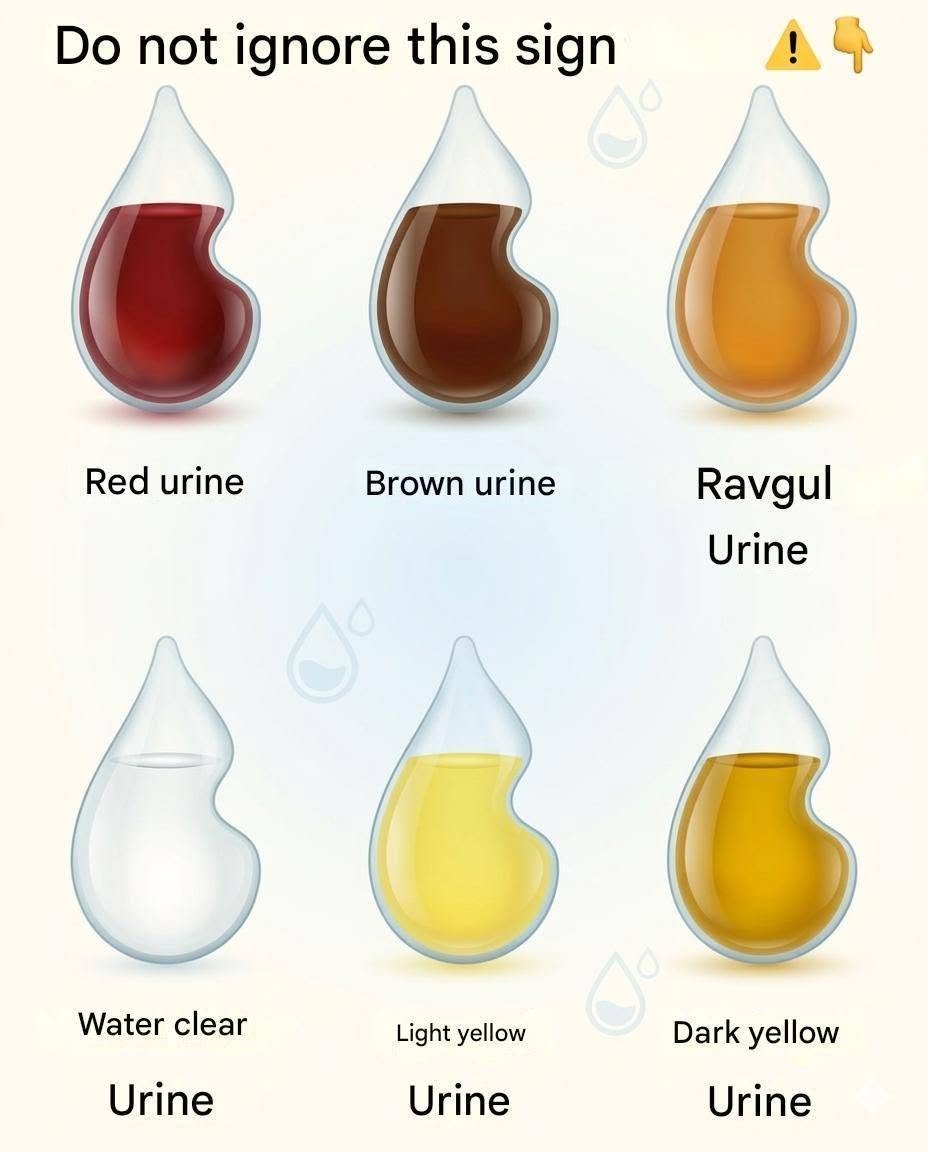
1. Pale Yellow: Usually a Normal Sign
Pale yellow or straw-colored urine is commonly considered normal.
The yellow color comes largely from urochrome, a pigment produced as the body processes substances from normal metabolism.
Urine may be lighter when you’ve recently had plenty of fluids and darker when you’re more dehydrated.
There’s no need to force your urine to become completely clear. Drinking excessive amounts of water can also be dangerous.
2. Dark Yellow: You May Need More Fluids
Dark yellow urine often occurs when urine is more concentrated.
This can happen after sleeping overnight, exercising, spending time in hot weather, or simply not drinking enough throughout the day.
Having some water and continuing normal hydration may gradually make the urine lighter.
However, persistent dark urine—especially when accompanied by other symptoms—shouldn’t automatically be blamed on dehydration.
3. Completely Clear Urine: Not Necessarily “Extra Healthy”
Very clear urine can simply mean that your urine is highly diluted.
Occasionally having clear urine isn’t usually concerning, but constantly drinking excessive amounts of water in an attempt to “flush toxins” is unnecessary.
Overhydration can dilute sodium in the blood and become medically dangerous.
Drink according to thirst and your circumstances rather than trying to keep your urine completely colorless.
4. Orange Urine: Several Possible Causes
Orange urine can sometimes result from dehydration, which makes urine more concentrated.
Certain medications can also turn urine orange or orange-red.
In some circumstances, orange or very dark urine can be associated with problems involving the liver or bile flow, particularly when accompanied by yellowing of the skin or eyes, pale stools, abdominal pain, or significant illness.
Persistent unexplained orange urine should be discussed with a healthcare professional.
5. Pink or Red Urine: Don’t Ignore It
Pink, red, or reddish-brown urine can sometimes indicate blood in the urinary tract.
Possible causes include urinary infections, kidney stones, irritation, or other conditions.
However, not every red-looking urine sample contains blood. Certain foods and medications can also change urine color.
Because visible blood in urine can have important causes, unexplained pink or red urine should be medically evaluated rather than simply dismissed.
6. Brown or Cola-Colored Urine
Brown or very dark urine can occur when urine is extremely concentrated, but it can also have other causes.
Certain medications, liver or bile problems, and some medical conditions can produce brown urine.
Rarely, severe muscle injury can release a substance called myoglobin into the bloodstream, which can make urine appear dark.
If brown urine is persistent or occurs with severe muscle pain, weakness, yellow skin or eyes, or feeling seriously unwell, seek medical attention promptly.
7. Green or Blue Urine
Blue or green urine is uncommon.
It can occasionally result from certain medications, dyes used in medical procedures, or particular foods or supplements.
Some infections can also cause unusual urine colors.
If your urine becomes blue or green without an obvious explanation, especially if you also have fever, pain, burning during urination, or other symptoms, contact a healthcare professional.
8. Cloudy or Milky Urine
Cloudy urine can happen for relatively harmless reasons, including crystals, concentrated urine, or certain dietary factors.
But cloudy urine accompanied by burning, frequent urination, pelvic discomfort, fever, or a strong unusual odor can occur with a urinary tract infection.
Cloudiness can also have other causes, so the appearance alone isn’t enough to determine what’s happening.
9. Foamy or Bubbly Urine
A few bubbles in the toilet are usually not a problem.
Urine can foam temporarily because of the force of the urine stream or the way it hits the water.
However, persistent or unusually frothy urine can sometimes be associated with protein in the urine.
If this happens repeatedly, particularly alongside swelling around the eyes, hands, feet, or ankles, it’s worth discussing with a healthcare professional.
A urine test can determine whether protein is actually present.
What About Urine Odor?
Color isn’t the only thing that can change.
Urine may smell stronger when it’s concentrated or after eating certain foods. Some medications and supplements can also alter its smell.
A strong odor accompanied by burning, frequent urination, pelvic pain, fever, or other symptoms may warrant evaluation for a urinary problem.
When Urine Changes Should Be Checked
Contact a healthcare professional if you notice:
- Unexplained blood or red urine
- Persistent brown or very dark urine
- Repeatedly orange urine without an obvious cause
- Persistent foamy urine
- Cloudy urine with urinary symptoms
- Major changes accompanied by pain or fever
- Yellow skin or eyes alongside dark urine
- Changes that continue despite normal hydration
Don’t Try to Diagnose Yourself From Color Alone
A common mistake is treating urine color as a complete health test.
It isn’t.
Two people can have the same urine color for completely different reasons, and some important conditions don’t noticeably change urine color at all.
When a change persists, healthcare professionals can use urine testing, blood tests, and other evaluations to identify the actual cause.
Final Takeaway
Urine color can provide clues, but it isn’t a diagnosis.
Pale yellow urine is commonly normal, while darker yellow urine can occur when urine is concentrated. Unusual colors such as red, brown, orange, blue, or green can have several possible explanations ranging from food and medications to medical conditions.
The most important thing is to consider how long the change lasts and whether other symptoms are present.
A temporary color change after dehydration, a particular food, or a medication may be harmless. Persistent or unexplained changes—especially blood-colored, brown, or markedly unusual urine—deserve appropriate medical attention.
