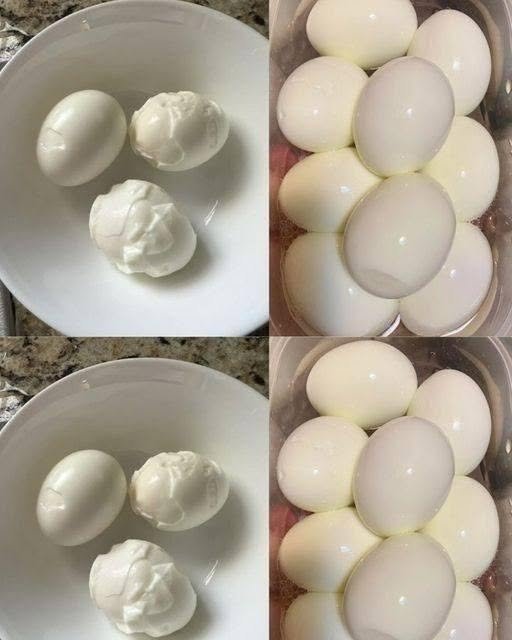
The Secret to Perfectly Peeled Hard-Boiled Eggs
Few kitchen tasks are more frustrating than peeling a hard-boiled egg and watching half the white come away with the shell.
Sometimes the shell practically falls off. Other times, the egg seems determined to stay wrapped in a layer of shell and membrane.
The good news is that perfectly peeled hard-boiled eggs aren’t really about luck. A few simple techniques can make the process much easier and more consistent.
Start With the Right Cooking Method
For easier peeling, place the eggs into already-boiling water rather than starting them in cold water.
Carefully lower the eggs into the boiling water with a spoon to prevent cracking. Reduce the heat slightly so the water maintains a steady simmer.
Cook the eggs for about 10–12 minutes, depending on their size and how firm you prefer the yolks.
If you’re cooking a large batch, try to keep the eggs in a single layer so they cook evenly.
The Real Trick: An Ice-Water Bath
As soon as the eggs finish cooking, transfer them directly into a bowl of ice water.
This rapid cooling does two useful things: it stops the cooking process and cools the egg enough to make handling easier.
Let the eggs sit in the ice bath for approximately 5–10 minutes.
This step is especially helpful when you want firm whites and fully cooked yolks without continuing to cook the eggs from residual heat.
Why Older Eggs Can Be Easier to Peel
Fresh eggs can sometimes be more difficult to peel than eggs that have been stored for a little while.
As an egg ages, its internal chemistry changes and the pH of the egg white rises. That can make the cooked white less strongly attached to the inner membrane.
So if you’re planning to make deviled eggs or another recipe where appearance matters, eggs that aren’t extremely fresh may sometimes peel more easily.
Always use eggs that have been properly refrigerated and are still within their safe storage period.
How to Peel Them Without Destroying the White
Once the eggs are thoroughly chilled, gently tap one against a hard surface.
Crack the shell all around the egg rather than trying to remove it from one large piece.
Then begin peeling from the larger end.
There’s usually a small air pocket at that end, which can give you a convenient place to get underneath the shell and membrane.
Peeling the egg under a gentle stream of water can also help loosen tiny pieces of shell.
The Membrane Is the Part You Want to Find
The shell itself isn’t always the biggest problem.
Underneath the shell is a thin membrane that can cling to the cooked egg white. Once you get underneath that membrane, the shell often comes away much more easily.
Instead of picking at individual shell fragments, try sliding your finger between the membrane and the egg white and gently lifting both together.
Don’t Peel Them While They’re Still Hot
Hot eggs are more difficult to handle, and the whites can be softer and more delicate.
Allowing them to cool thoroughly makes peeling easier and reduces the chance of burning your fingers.
The ice-water bath also gives you a useful window to cool the eggs quickly before peeling.
Do You Need Baking Soda or Vinegar?
You may have heard that adding baking soda or vinegar to the cooking water is the secret to easy-to-peel eggs.
These tricks are popular, but they aren’t necessary.
The biggest factors are generally the cooking method, the age of the eggs, rapid cooling, and careful peeling.
If your eggs consistently peel poorly, changing those factors is usually more useful than relying on a special ingredient.
A Simple Foolproof Routine
For consistently easy-to-peel eggs, try this sequence:
- Bring a pot of water to a boil.
- Carefully lower the eggs into the water.
- Maintain a gentle boil or simmer.
- Cook for about 10–12 minutes.
- Immediately transfer the eggs to ice water.
- Chill for 5–10 minutes.
- Tap the shell gently all over.
- Start peeling from the wider end.
- Work underneath the membrane.
- Rinse away any remaining shell fragments.
That’s it.
No complicated ingredients or special gadgets are required.
How to Store Hard-Boiled Eggs
If you aren’t eating the eggs immediately, refrigerate them promptly.
Hard-boiled eggs can generally be kept refrigerated for up to one week, provided they have been handled and stored safely.
Keeping them in their shells until you’re ready to eat them can also help protect the egg from absorbing odors from other foods in the refrigerator.
Final Takeaway
The secret to beautifully peeled hard-boiled eggs isn’t one magical ingredient.
It’s a combination of boiling the eggs properly, cooling them rapidly in ice water, and peeling them carefully from the wider end while working underneath the membrane.
Once you get that routine down, those frustrating little pieces of shell stuck to your egg can become much less of a problem.
