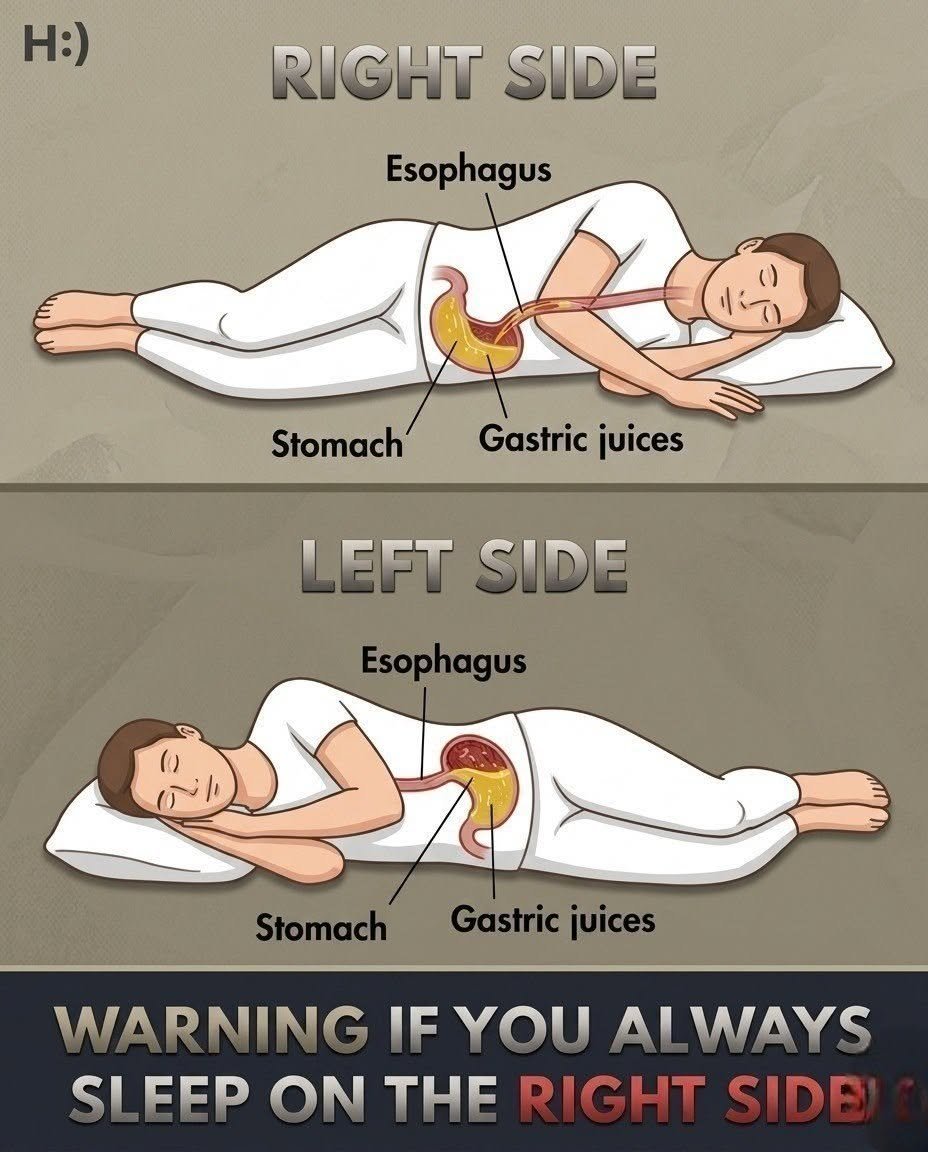
Note That If You Always Sleep on Your Right Side, You Should Have a Look at These Possible Effects
Sleeping on your side is a common and generally comfortable sleeping position. Some people naturally settle on their right side every night and may wonder whether staying in the same position for years can affect their health.
The answer is more nuanced than many viral posts suggest.
Sleeping on your right side is not inherently unhealthy. For most people, the most important thing is getting enough comfortable, uninterrupted sleep.
However, your sleeping position can influence symptoms such as reflux, snoring, shoulder discomfort, and pressure on certain parts of the body.
1. It May Affect Acid Reflux
One of the better-known differences between sleeping positions involves gastroesophageal reflux.
For some people with nighttime heartburn or reflux, sleeping on the left side may reduce reflux compared with sleeping on the right side.
This doesn’t mean everyone who sleeps on the right side will develop reflux. If you sleep comfortably and don’t experience heartburn, there may be no reason to force yourself into another position.
If you regularly experience burning in the chest, sour-tasting fluid coming into your mouth, or discomfort after lying down, discuss persistent symptoms with a healthcare professional.
2. Your Shoulder May Become Uncomfortable
When you sleep on one side for a long time, that shoulder can bear pressure for hours.
Some people may develop shoulder soreness, especially if their mattress or pillow doesn’t provide adequate support.
A pillow that keeps your head and neck in a neutral position can make side sleeping more comfortable.
You can also change positions naturally during the night rather than trying to remain perfectly still.
3. Your Neck and Spine Need Support
The problem isn’t necessarily the right side itself.
For side sleepers, the height and firmness of the pillow can affect whether the neck remains aligned with the rest of the spine.
A pillow that is too low or too high may leave the neck bent for extended periods.
If you regularly wake with neck stiffness or shoulder discomfort, adjusting your pillow and sleeping position may help.
4. Side Sleeping May Influence Snoring
Sleep position can affect the airway.
For many people who snore, sleeping on the side can be preferable to sleeping flat on the back because back sleeping may allow the tongue and soft tissues to narrow the airway more easily.
However, simply switching from the right side to the left side isn’t a guaranteed solution.
Persistent loud snoring, pauses in breathing during sleep, gasping, morning headaches, or significant daytime sleepiness can be signs of a sleep disorder such as sleep apnea and should be discussed with a healthcare professional.
5. Your Body Naturally Changes Position
You don’t need to worry about staying on one side for the entire night.
Most people move to some degree while sleeping.
Your body may naturally shift when one area becomes uncomfortable or when you enter a different stage of sleep.
Trying to consciously maintain one exact sleeping position all night can actually make sleep more difficult.
Comfort matters.
6. What About the Heart?
You may have seen claims online that sleeping on the right side is dangerous because it supposedly puts pressure on the heart.
For most healthy people, there is no reason to believe that simply sleeping on the right side will damage the heart.
The heart is protected inside the chest, and the body is designed to function in different positions.
People with certain heart or breathing conditions may receive individualized advice about sleeping position, but that is different from saying right-side sleeping is dangerous for everyone.
7. Pregnancy Is Different
Pregnancy can change which sleeping positions are comfortable and may influence medical recommendations.
Pregnant people should follow guidance from their own healthcare professional, particularly later in pregnancy.
A viral rule claiming that one position is always dangerous is an oversimplification.
8. Your Mattress and Pillow May Matter More
If you’re waking with aches and stiffness, don’t immediately blame the fact that you’re sleeping on your right side.
Other factors may matter more, including:
- Pillow height
- Mattress firmness
- Sleeping posture
- Shoulder position
- Existing joint or muscle problems
- How long you remain in one position
- Overall sleep quality
Small adjustments can sometimes make side sleeping much more comfortable.
Should You Switch to Your Left Side?
Not necessarily.
If you sleep well on your right side and don’t have symptoms that are affected by your position, there’s generally no medical requirement to switch.
However, if you experience nighttime reflux, experimenting with the left side may be reasonable because some people experience fewer reflux symptoms in that position.
The goal isn’t to follow a viral sleep rule. It’s to find a position that allows you to sleep comfortably while addressing any symptoms you may have.
When Your Sleeping Position Deserves Attention
Talk with a healthcare professional if you regularly experience:
- Significant nighttime heartburn
- Persistent neck or shoulder pain
- Loud or disruptive snoring
- Gasping or choking during sleep
- Repeated pauses in breathing noticed by someone else
- Significant daytime sleepiness
- Repeated nighttime waking
- New or unexplained breathing difficulties
These symptoms may have causes that have nothing to do with whether you sleep on your right or left side.
Final Takeaway
Sleeping on your right side isn’t automatically bad for your health.
For many people, it’s simply a comfortable sleeping position.
The main consideration is whether your position seems to worsen a particular problem. Some people with nighttime acid reflux may feel better sleeping on their left side, while side sleeping in general can be helpful for some people who snore.
Rather than worrying about staying on the “correct” side all night, focus on comfortable sleep, good neck and spine support, and any symptoms that repeatedly disturb your rest.
Your body doesn’t need you to follow a perfect sleeping position. It needs adequate, comfortable sleep.
