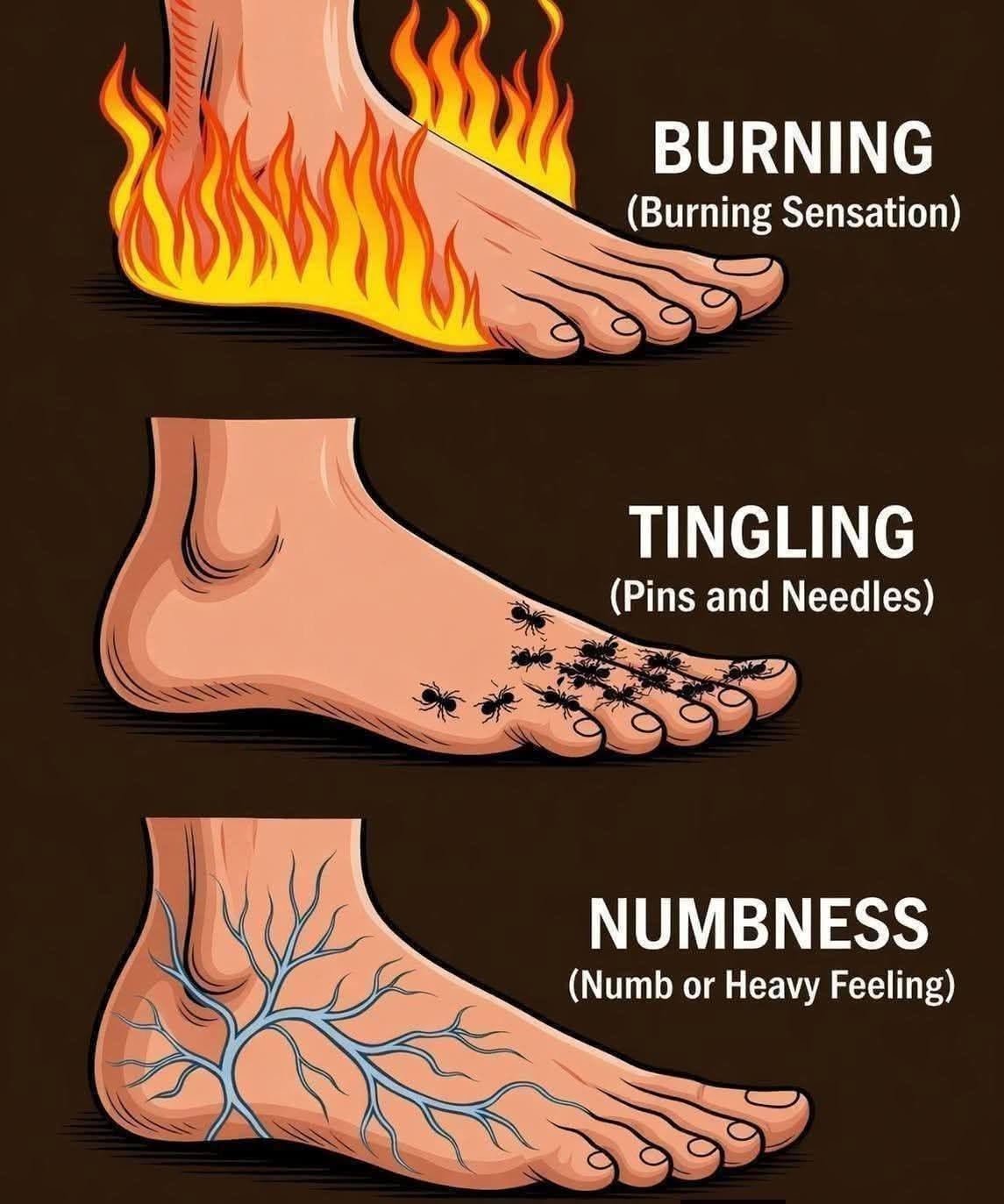
Burning, Numbness, and Tingling in the Feet: What It Can Mean
Burning, numbness, pins-and-needles sensations, or tingling in the feet are common symptoms, but they shouldn’t automatically be blamed on tiredness or poor circulation.
Sometimes the cause is temporary and harmless, such as sitting in an awkward position for too long. In other cases, persistent symptoms can indicate a problem involving the nerves, blood vessels, spine, medications, or an underlying health condition.
The pattern of symptoms matters.
Is it happening in one foot or both? Is it occasional or constant? Did it begin suddenly or gradually? Are there other symptoms such as weakness, swelling, pain, or changes in skin color?
Those details can help determine what needs attention.
1. Nerve Compression or Irritation
Pressure on a nerve can cause tingling or numbness.
This can happen temporarily after sitting or sleeping in an awkward position. Symptoms generally improve when pressure is removed.
Problems affecting nerves in the lower back can also produce sensations that travel down the leg and into the foot.
Persistent or recurring symptoms deserve evaluation, particularly when they are accompanied by weakness or difficulty walking.
2. Peripheral Neuropathy
Peripheral neuropathy occurs when nerves outside the brain and spinal cord become damaged or don’t function normally.
Symptoms can include:
- Burning
- Tingling
- Numbness
- Electric or shooting sensations
- Increased sensitivity to touch
- Reduced ability to feel temperature
The symptoms often begin in the feet and may gradually move upward.
There are many possible causes, including diabetes, certain vitamin deficiencies, alcohol-related nerve damage, some medications, kidney disease, and other medical conditions.
3. Vitamin Deficiency
Some nutritional deficiencies can affect nerve function.
Vitamin B12 deficiency is particularly important because prolonged deficiency can cause neurological symptoms, including numbness and tingling.
Other nutritional problems can also contribute to nerve symptoms.
However, taking large doses of vitamins without knowing whether you are deficient isn’t necessarily helpful and can sometimes cause harm. A healthcare professional can determine whether testing is appropriate.
4. Blood Glucose Problems
Persistently elevated blood glucose can damage nerves over time.
This is one reason burning or numb feet can occur in people with diabetes.
Someone who has persistent symptoms along with increased thirst, frequent urination, unusual fatigue, or other signs of abnormal blood glucose should discuss them with a healthcare professional.
5. Circulation Problems
Reduced blood flow to the legs can sometimes produce coldness, numbness, pain, or changes in skin color.
Peripheral artery disease, for example, can cause leg discomfort during walking that improves with rest.
A foot that becomes unusually cold, pale, blue, or painful can require prompt medical attention.
Not every case of tingling is a circulation problem, though. Nerve-related causes are also common.
6. Certain Medications
Some medicines can affect nerves or contribute to changes in circulation.
If burning or tingling began after starting a medication or changing its dose, tell the prescribing healthcare professional.
Don’t stop a prescribed medicine on your own.
7. Footwear and Pressure
Shoes that place excessive pressure on the toes or feet can cause temporary numbness and tingling.
Repeated pressure may irritate nerves.
Well-fitting footwear and avoiding prolonged pressure can help when footwear is the cause.
8. Alcohol and Other Factors
Heavy alcohol use can contribute to nerve damage and nutritional deficiencies.
Other factors, including prolonged pressure on nerves, certain infections, autoimmune conditions, and kidney or thyroid disorders, can also cause neuropathy-like symptoms.
That’s why persistent symptoms should be evaluated rather than treated with a single “foot vitamin.”
When Should You See a Doctor?
Make an appointment if burning, numbness, or tingling:
- Keeps returning
- Gradually becomes worse
- Is present most of the time
- Affects both feet
- Interferes with walking or sleep
- Is accompanied by weakness
- Comes with balance problems
- Occurs alongside unexplained fatigue or other health changes
- Appears after starting a new medication
A healthcare professional may examine sensation, reflexes, strength, circulation, and the feet themselves. Depending on the situation, blood tests or other investigations may be appropriate.
When Is It an Emergency?
Sudden neurological symptoms should never be ignored.
Seek emergency medical care for sudden numbness or weakness, particularly if it affects one side of the body or occurs with facial drooping, difficulty speaking, sudden vision changes, severe sudden headache, confusion, or major loss of balance.
Also seek urgent care for a foot or leg that suddenly becomes severely painful, cold, pale or blue, or for rapidly developing swelling accompanied by significant symptoms.
Protect Numb Feet From Injury
Reduced sensation can make it harder to notice cuts, burns, blisters, or pressure injuries.
If your feet are persistently numb, check them regularly for injuries and take care around hot water, heating devices, sharp objects, and poorly fitting footwear.
Don’t walk barefoot in situations where an unnoticed injury could occur.
Don’t Assume You Need a Supplement
Online claims often suggest that burning feet automatically mean you are missing magnesium, vitamin B12, vitamin D, or another nutrient.
That isn’t necessarily true.
The right treatment depends on the underlying cause. Taking a supplement without identifying the problem can delay appropriate care, and excessive amounts of certain nutrients can themselves cause problems.
Food-first nutrition and appropriate medical testing are generally more useful than guessing.
Final Takeaway
Burning, numbness, and tingling in the feet are symptoms—not a diagnosis.
Temporary nerve pressure may cause occasional pins and needles, while persistent symptoms can be associated with neuropathy, diabetes, vitamin deficiency, medication effects, circulation problems, or other conditions.
If the symptoms are persistent, worsening, or accompanied by weakness or balance problems, arrange a medical evaluation.
And if numbness or weakness appears suddenly—especially on one side of the body—treat it as a medical emergency rather than waiting for it to go away.
