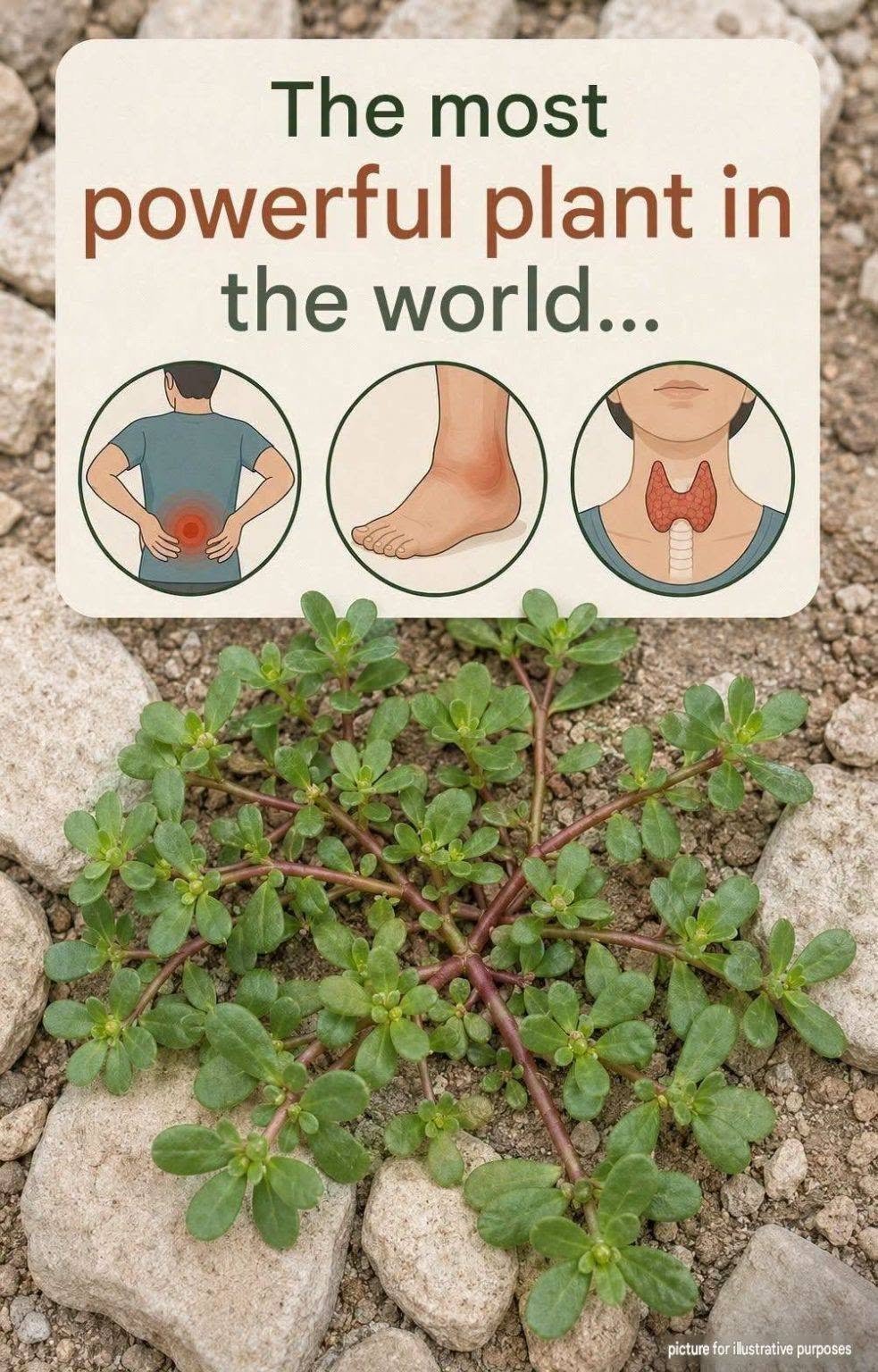
A Gentle, Science-Backed Guide to Purslane: The “Fat Grass” Weed That’s Actually a Garden Superfood
If you’ve ever noticed a low-growing plant spreading through cracks in your garden or appearing among vegetables, you may have dismissed it as an ordinary weed.
That plant could be purslane.
Known scientifically as Portulaca oleracea, purslane is a succulent plant with small fleshy leaves, reddish stems, and a slightly sour, refreshing flavor. In many parts of the world, it has been eaten as a vegetable for generations.
Sometimes called “fat grass” because of its fleshy leaves, purslane has recently attracted attention as a nutrient-rich edible plant.
But while purslane is genuinely nutritious, claims that it can cure disease, “detox” the body, or replace medical treatment go far beyond the evidence.
The interesting truth is more practical: purslane can be a flavorful way to add vegetables, minerals, fiber, and plant compounds to your diet when it has been correctly identified and safely grown or sourced.
What Makes Purslane Interesting?
Purslane is unusual among leafy vegetables because it contains a combination of nutrients and plant compounds that make it stand out.
It provides:
- Vitamin C
- Vitamin A-related carotenoids
- Some vitamin E
- Magnesium
- Potassium
- Calcium
- Iron
- Fiber
- Various antioxidant compounds
Its nutritional content can vary depending on growing conditions, maturity, and preparation.
Purslane Is a Plant Source of Omega-3 Fatty Acids
One of the most frequently discussed features of purslane is its alpha-linolenic acid (ALA) content.
ALA is an essential omega-3 fatty acid, meaning the body needs it from food.
Purslane can contain more ALA than many commonly eaten leafy vegetables, although the amount varies considerably.
It’s important to understand that ALA is different from the omega-3 fats EPA and DHA found in foods such as oily fish.
The body can convert some ALA into EPA and DHA, but the conversion is limited.
So purslane is an interesting plant source of ALA—not a direct equivalent of fish or algae-derived EPA and DHA.
It Contains Antioxidant Plant Compounds
Purslane contains several compounds with antioxidant activity, including carotenoids and polyphenols.
Antioxidants help protect cells from oxidative damage as part of the body’s normal biological systems.
Laboratory research has investigated purslane extracts for a variety of potential effects, including antioxidant and anti-inflammatory activity.
However, results from laboratory or animal studies cannot automatically be translated into proven health benefits in humans.
That’s an important distinction when evaluating “superfood” claims online.
A Source of Vitamin C
Purslane can contribute vitamin C to the diet.
Vitamin C is involved in normal immune function, collagen formation, wound healing, and absorption of iron from plant foods.
Because vitamin C is sensitive to heat and prolonged storage, preparation methods can influence how much remains in the food.
Eating a variety of fruits and vegetables is still the best way to obtain vitamin C rather than relying on one plant.
It Can Add Minerals to Your Diet
Purslane provides minerals including magnesium, potassium, calcium, and iron.
These nutrients have important roles throughout the body.
For example:
Potassium contributes to normal muscle and nerve function and helps regulate fluid balance.
Magnesium is involved in hundreds of biochemical reactions, including energy metabolism and normal muscle and nerve function.
Calcium is important for bones and teeth as well as muscle and nerve function.
Iron is needed to make hemoglobin, which carries oxygen through the body.
Purslane contributes these nutrients, but the exact amount depends on the portion and growing conditions.
What Does Purslane Taste Like?
Purslane has a distinctive texture.
Its leaves are succulent and slightly crunchy, while the flavor can be mildly sour or lemony.
That makes it useful in salads, soups, stews, vegetable dishes, and sauces.
Some people enjoy it raw, while others prefer cooking it.
Its slightly mucilaginous texture can also help thicken soups and stews naturally.
How People Commonly Eat It
Fresh young leaves and tender stems are commonly used as vegetables.
You can add washed purslane to:
- Salads
- Soups
- Stews
- Omelets
- Vegetable dishes
- Yogurt-based preparations
- Sandwiches or wraps
- Grain or bean dishes
Cooking can change both its texture and nutrient content, so using a mixture of raw and cooked vegetables throughout your diet provides variety.
The Most Important Safety Issue: Identification
This is where “wild superfood” advice needs caution.
Never eat a wild plant simply because it looks like a photograph of purslane online.
Several plants can resemble one another, and misidentification can be dangerous.
If you want to eat purslane that grows naturally in your garden or elsewhere, make sure it has been positively identified by a knowledgeable local source.
Also consider where it grew.
Avoid harvesting plants from areas that may have been exposed to:
- Pesticides
- Herbicides
- Road pollution
- Animal waste
- Contaminated soil
- Industrial pollutants
Edible plants should be thoroughly washed before eating.
Commercially grown purslane from a reliable food source can be a simpler option when identification or growing conditions are uncertain.
Purslane and Oxalates
Purslane contains oxalates, naturally occurring compounds found in many plants.
For most healthy people, eating ordinary portions of a varied diet isn’t necessarily a problem.
However, people who have been advised by a healthcare professional to follow a low-oxalate diet—particularly because of certain kidney-stone or kidney-related concerns—may need individualized dietary guidance.
This doesn’t mean everyone needs to avoid purslane.
It means that a nutritious food for one person may need to be limited for someone with a specific medical condition.
Is Purslane Really a “Superfood”?
The word “superfood” is mostly a marketing term rather than a scientific category.
Purslane certainly has an impressive nutritional profile, especially for such an ordinary-looking plant.
But it isn’t a miracle food.
There is not enough human evidence to claim that eating purslane cures diabetes, prevents cancer, cleans blocked arteries, treats infections, or replaces medication.
Research into purslane and its compounds is interesting, but promising laboratory findings aren’t the same thing as proven clinical treatments.
Can Purslane Replace Vegetables?
No—and it doesn’t need to.
The advantage of purslane is that it can add variety.
A healthy eating pattern can include many different vegetables, fruits, beans, whole grains, nuts, seeds, and appropriate protein sources.
Different plants provide different combinations of fiber, vitamins, minerals, and phytochemicals.
Think of purslane as one nutritious vegetable among many, rather than a replacement for everything else.
A Simple Way to Try It
If you have correctly identified food-safe purslane, start with a modest amount.
Wash it thoroughly and add the tender leaves and stems to a salad, soup, or cooked vegetable dish.
Because purslane has a naturally fresh, slightly tart flavor, it can work particularly well alongside tomatoes, cucumbers, beans, yogurt, herbs, or lemon.
There’s no need to consume large quantities to obtain benefits.
Final Takeaway
Purslane may look like an ordinary garden weed, but it is an edible plant with a genuinely interesting nutritional profile.
It provides vitamin C, carotenoids, minerals, fiber, antioxidant compounds, and plant-based ALA omega-3 fatty acid.
That’s enough to make it a worthwhile addition to a varied diet when properly identified and safely sourced.
But “superfood” shouldn’t mean “miracle cure.” Purslane cannot replace a balanced diet, prescribed medication, or medical care.
The best way to appreciate this humble plant is simply to recognize what it really is: a nutritious traditional leafy vegetable that deserves a place alongside many other vegetables—not a magical treatment hiding in the garden.
