🩺 What Is Normal Blood Pressure for Each Age?
Blood pressure naturally changes as people grow. There isn’t one single “normal” number for every age, and children and teenagers are assessed differently from adults.
Blood pressure is written as two numbers:
- Systolic (top number): pressure when the heart contracts.
- Diastolic (bottom number): pressure when the heart relaxes between beats.
For example, 120/80 mmHg means a systolic pressure of 120 and a diastolic pressure of 80.
👶 Babies and young children
For infants and young children, blood pressure is normally much lower than adult blood pressure.
Doctors don’t use a simple adult-style chart for children. They consider factors such as age, sex, and height when determining whether a child’s reading is unusually high.
A single unusual reading also doesn’t necessarily mean a child has hypertension.
🧒 School-age children
As children grow, their blood pressure gradually increases.
For children and teenagers, healthcare professionals generally compare the measurement with standardized pediatric blood-pressure tables rather than saying, “this age should always have exactly this number.”
That’s important because height and age both affect the expected range.
🧑 Teenagers
Teenagers are also assessed using age- and size-appropriate standards.
Once someone reaches adulthood, the commonly used adult categories become more straightforward.
For teens, don’t assume that an adult reading is automatically normal or abnormal without considering the appropriate pediatric guidelines.
👨 Adults
For adults, commonly used categories are:
| Blood pressure | Systolic | Diastolic |
|---|---|---|
| Normal | Less than 120 | and less than 80 |
| Elevated | 120–129 | and less than 80 |
| High blood pressure — Stage 1 | 130–139 | or 80–89 |
| High blood pressure — Stage 2 | 140 or higher | or 90 or higher |
These categories are based on the higher category when either number is elevated.
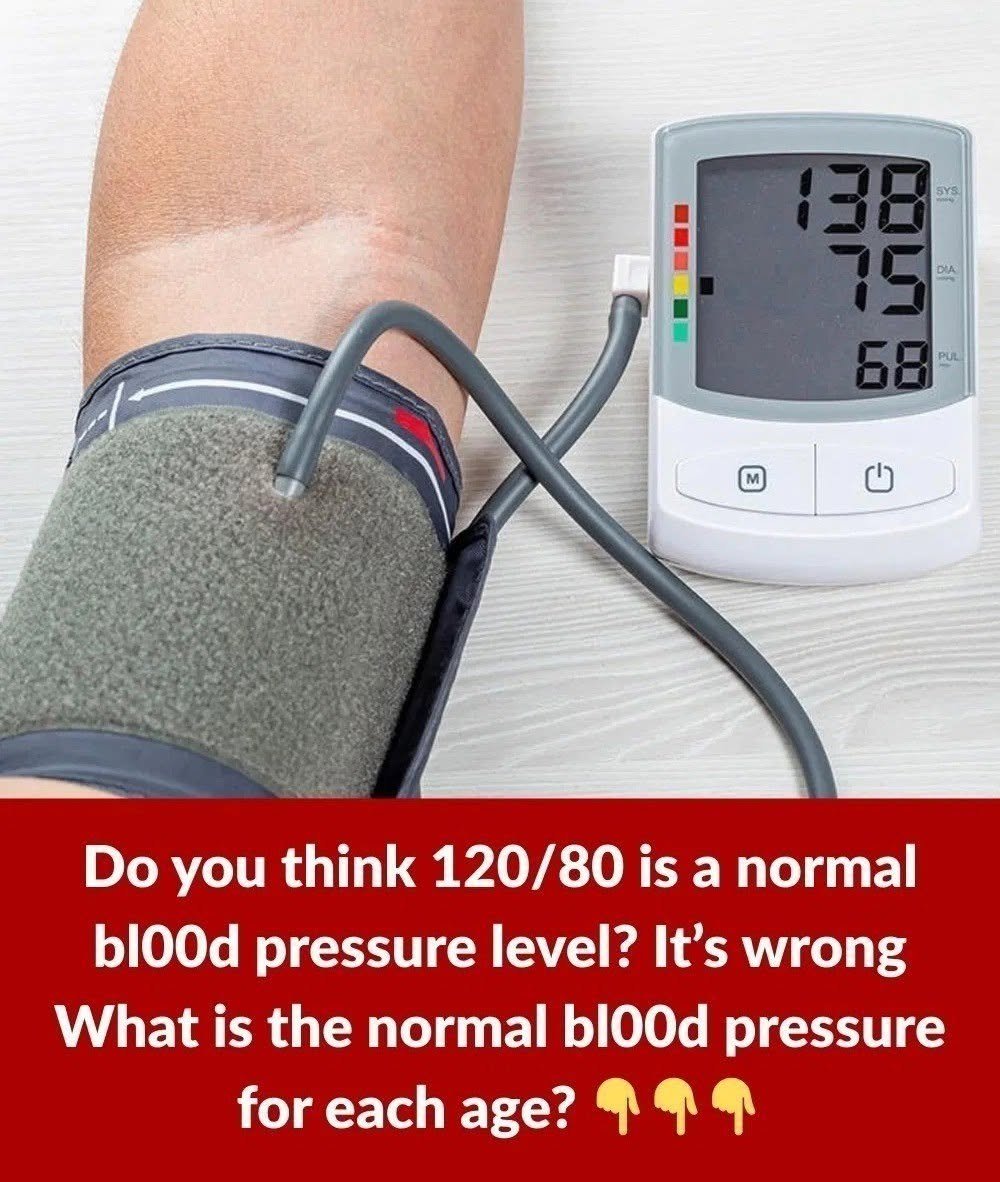
For example, a reading of 135/75 falls into the Stage 1 category because the top number is elevated.
👵 Does blood pressure have a different “normal” number after age 60 or 70?
A common internet claim is that older adults should have a specific higher blood pressure simply because of their age.
It’s more complicated than that.
There isn’t a rule saying that someone should automatically have a particular blood pressure just because they’re 60, 70, or 80. Blood-pressure goals can depend on overall health and individual medical circumstances.
That’s why an older person’s target should be discussed with their healthcare professional rather than relying on an age-only chart.
📏 How to get a more accurate reading
Blood pressure can temporarily rise because of stress, exercise, caffeine, or even talking during the measurement.
For a more reliable home reading:
- Sit quietly for about five minutes first.
- Keep your back supported.
- Put both feet flat on the floor.
- Rest your arm comfortably at heart level.
- Put the cuff directly on your bare upper arm.
- Don’t talk while measuring.
- Take more than one reading when appropriate and record the results.
🚨 What if the reading is very high?
One high reading doesn’t necessarily mean someone has chronic high blood pressure.
However, very high blood pressure accompanied by symptoms such as chest pain, severe shortness of breath, confusion, weakness, vision changes, or a severe headache requires urgent medical attention.
❤️ Bottom Line
There is no single normal blood-pressure number for every age.
Children and teenagers are assessed using age, sex, and height-related standards, while adults are generally assessed using adult blood-pressure categories.
And remember: one blood-pressure reading is only a snapshot. Repeated measurements taken correctly provide much more useful information than a single number.
