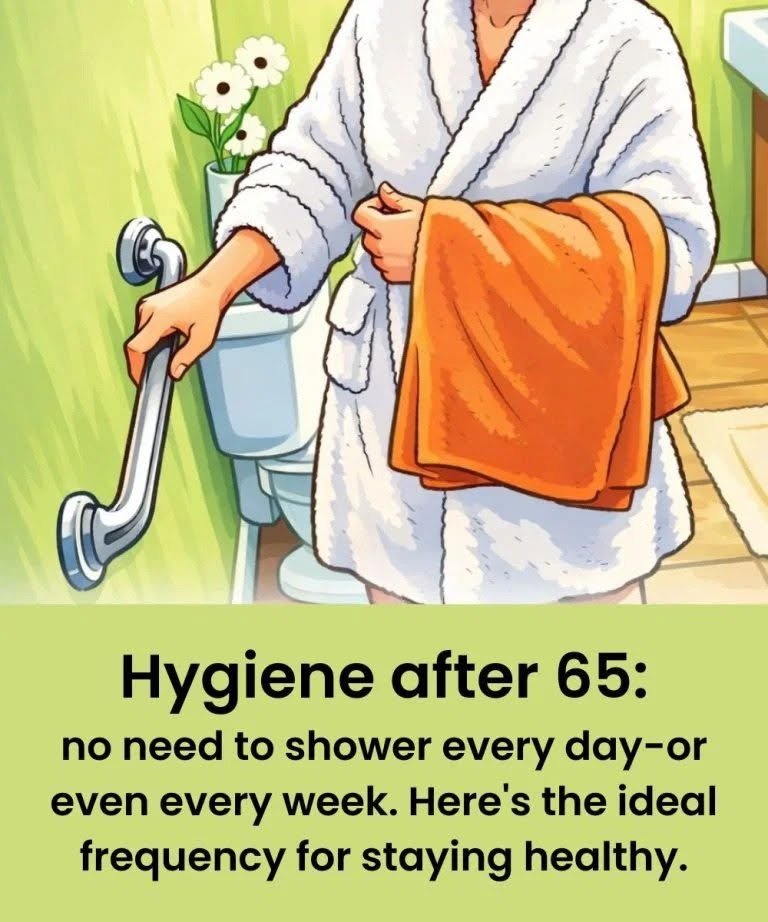
Why Daily Showers After 65 May Sometimes Do More Harm Than Good
As people get older, their skin often becomes thinner, drier, and more sensitive. That can change how the skin responds to hot water, soap, and frequent washing.
But there is no universal rule that people over 65 should stop showering every day. For some older adults, a daily shower is perfectly comfortable and appropriate.
The bigger issue is how you shower and what products you use.
Very hot water, long showers, harsh soaps, and vigorous scrubbing can strip protective oils from the skin and contribute to dryness and irritation.
1. Hot Water Can Dry Out Aging Skin
Hot water can remove some of the natural oils that help maintain the skin barrier.
Because aging skin tends to produce less oil and can become drier, frequent exposure to very hot water may leave the skin feeling tight, itchy, flaky, or uncomfortable.
A gentler approach
Use comfortably warm—not very hot—water.
Keep showers reasonably brief and avoid treating the skin as though it needs aggressive scrubbing to become clean.
2. Harsh Soap Can Irritate the Skin
Strongly fragranced soaps, antibacterial cleansers, and other harsh products can be irritating for some people.
Older skin may be particularly sensitive to products that remove too much of its natural protective barrier.
A gentle cleanser is usually sufficient for areas that actually need cleansing, such as the underarms, groin, feet, and visibly dirty areas.
The entire body does not necessarily need to be covered in strong soap during every shower.
3. Scrubbing Too Hard Can Damage the Skin Barrier
Washcloths, rough sponges, and vigorous scrubbing can cause irritation, particularly when the skin is already dry or fragile.
There is no health benefit to scrubbing until the skin feels “squeaky clean.”
Gentle washing with the hands or a soft cloth is generally enough.
4. Long Showers Can Make Dryness Worse
Spending a long time under running water can be relaxing, but prolonged exposure—especially to hot water—may worsen dry skin.
For someone already experiencing itching or flaking, reducing shower temperature and duration may make a noticeable difference.
5. Getting Out of the Shower Can Be a Fall Risk
For older adults, the bathroom itself can sometimes present a bigger concern than the shower frequency.
Wet floors and slippery surfaces can increase the risk of falling.
Suddenly standing up after a hot shower may also make some people feel lightheaded, particularly if they are prone to blood-pressure changes.
Make the bathroom safer
Consider:
- A nonslip bath or shower surface
- Secure grab bars installed appropriately
- Good lighting
- Keeping frequently used items within easy reach
- Sitting while showering if standing is difficult
- Taking your time when getting out
Avoid relying on loose towels or unstable objects as makeshift supports.
6. Moisturizing After Showering Matters
One of the simplest ways to protect aging skin is to apply a fragrance-free moisturizer after bathing.
Pat the skin gently rather than rubbing it aggressively, and apply moisturizer while the skin is still slightly damp.
Creams and ointments are often more effective for very dry skin than lightweight lotions.
Does Everyone Over 65 Need to Shower Less Often?
No.
The appropriate bathing routine depends on the person’s skin, activity level, sweating, incontinence, medical conditions, climate, personal preference, and ability to bathe safely.
Some people may be comfortable showering daily. Others may find that less frequent full-body showers reduce dryness and irritation.
The goal is clean, comfortable, healthy skin—not a specific number of showers per week.
When Skin Changes Need Medical Attention
Persistent itching, cracking, redness, rashes, sores, or unexplained skin changes should not automatically be blamed on frequent showering.
Conditions such as eczema, psoriasis, fungal infections, allergies, medication reactions, and other medical problems can produce similar symptoms.
Seek medical advice if a skin problem is persistent, worsening, painful, infected-looking, or interfering with sleep or everyday activities.
A Skin-Friendly Shower Routine
For many older adults, a simple routine works well:
- Use warm rather than very hot water.
- Keep the shower reasonably short.
- Use a gentle cleanser.
- Avoid vigorous scrubbing.
- Pat the skin dry.
- Apply moisturizer while the skin is still slightly damp.
- Keep the bathroom floor and shower area as safe as possible.
This approach can provide the benefits of regular bathing while reducing unnecessary irritation.
Final Takeaway
Daily showers after 65 are not automatically harmful. The concern is that aging skin can be more vulnerable to dryness and irritation from very hot water, lengthy showers, harsh cleansers, and vigorous scrubbing.
A better strategy is to personalize the bathing routine: use warm water, gentle products, moisturize afterward, and make bathroom safety a priority.
For older adults, good hygiene should go hand in hand with protecting the skin barrier and preventing falls.
