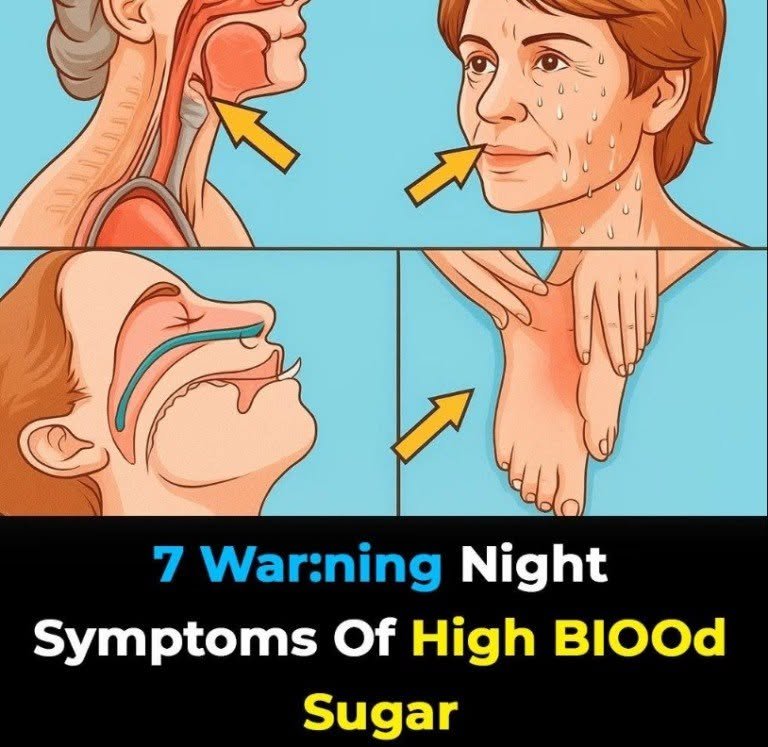
7 Warning Night Symptoms of High Blood Sugar
High blood sugar, also called hyperglycemia, doesn’t always produce obvious symptoms. Some people have few or no symptoms, while others notice changes that become particularly obvious during the evening or overnight.
Certain nighttime symptoms can occur when blood glucose is elevated, but they can also have many other causes. The only way to determine whether blood sugar is actually high is through appropriate glucose testing.
Here are seven signs worth knowing.
1. Waking Up Frequently to Urinate
One of the most recognizable symptoms associated with high blood sugar is increased urination.
When glucose levels become too high, the kidneys may remove more glucose through urine, bringing additional water with it. This can increase urine production.
If you repeatedly wake several times during the night to urinate—especially when this is a new change—it is worth discussing with a healthcare professional.
Nighttime urination can also result from drinking fluids before bed, caffeine, certain medications, urinary problems, or other conditions, so it isn’t specific to diabetes.
2. Feeling Extremely Thirsty at Night
Increased urination can contribute to fluid loss, which may leave someone unusually thirsty.
You might notice that you wake during the night wanting water or feel unusually thirsty when you first get up.
Persistent excessive thirst, particularly when it occurs together with frequent urination, is a recognized symptom of diabetes.
3. Waking With a Very Dry Mouth
High blood sugar can be associated with dehydration, which may contribute to a dry mouth.
However, morning or nighttime dry mouth is also extremely common with mouth breathing, nasal congestion, dry air, certain medications, and other conditions.
Therefore, dry mouth by itself isn’t evidence of high blood sugar.
4. Blurred Vision
High blood glucose can temporarily affect the fluid balance in the eye and cause blurred vision.
If blurry vision repeatedly occurs alongside increased thirst, urination, or fatigue, it is worth getting evaluated rather than assuming it is simply tiredness or needing new glasses.
Sudden or severe changes in vision require prompt medical assessment.
5. Feeling Unusually Tired
Persistent fatigue can occur when blood glucose is elevated.
Someone might wake up feeling as though they haven’t rested properly despite getting enough time in bed.
Fatigue has many possible causes, including insufficient sleep, stress, infections, anemia, medication effects, and other health conditions. It becomes more meaningful when it occurs together with other symptoms associated with high blood sugar.
6. Headache or Feeling Unwell Overnight
Some people with significant changes in blood glucose may experience headaches or generally feel unwell.
But nighttime headaches are not a specific sign of high blood sugar. Sleep problems, dehydration, illness, stress, and many other factors can cause them.
If headaches repeatedly occur together with excessive thirst, frequent urination, or known high glucose readings, medical advice is appropriate.
7. Waking With Unusual Weakness or Other Glucose-Related Symptoms
High blood sugar can be associated with weakness or feeling unusually tired.
However, there’s an important complication: people with diabetes can also experience low blood sugar during sleep, particularly when taking insulin or certain glucose-lowering medicines.
Nighttime low blood sugar can cause sweating, nightmares, shakiness, a fast heartbeat, tiredness, irritability, or confusion after waking.
So waking sweaty, shaky, or confused should not automatically be labeled a sign of high blood sugar. Checking glucose when appropriate can help distinguish high and low blood sugar.
These Symptoms Don’t Diagnose Diabetes
One of the most important things to remember is that symptoms alone cannot establish a diabetes diagnosis.
Diabetes can sometimes develop with very mild symptoms or no symptoms at all, particularly type 2 diabetes. Blood tests are used to diagnose diabetes.
A healthcare professional may use tests such as fasting blood glucose or an A1C test depending on the situation.
When High Blood Sugar Becomes an Emergency
Very high blood sugar can sometimes lead to diabetic ketoacidosis (DKA), a serious medical emergency.
Warning signs can include:
- Very intense thirst
- Frequent urination
- Nausea or vomiting
- Abdominal pain
- Severe tiredness
- Fruity-smelling breath
- Trouble breathing
- Fainting or severe confusion
DKA is especially associated with type 1 diabetes but can also occur in some people with type 2 diabetes. It requires urgent medical treatment.
What Should You Do?
If nighttime thirst, urination, fatigue, or blurred vision keeps happening, don’t try to diagnose the cause from symptoms alone.
Talk with a healthcare professional about whether glucose testing is appropriate. If you already have diabetes, follow the monitoring and medication plan provided by your healthcare team rather than changing medication doses yourself.
Final Takeaway
The most recognizable symptoms associated with high blood sugar include increased thirst, frequent urination, fatigue, and blurred vision. These can become particularly noticeable overnight or when waking.
But nighttime symptoms aren’t automatically caused by high blood sugar. Some can also occur with dehydration, sleep problems, medications, infections, or even low blood sugar.
Persistent symptoms deserve evaluation, and symptoms such as vomiting, trouble breathing, severe confusion, or fainting require urgent medical attention.
