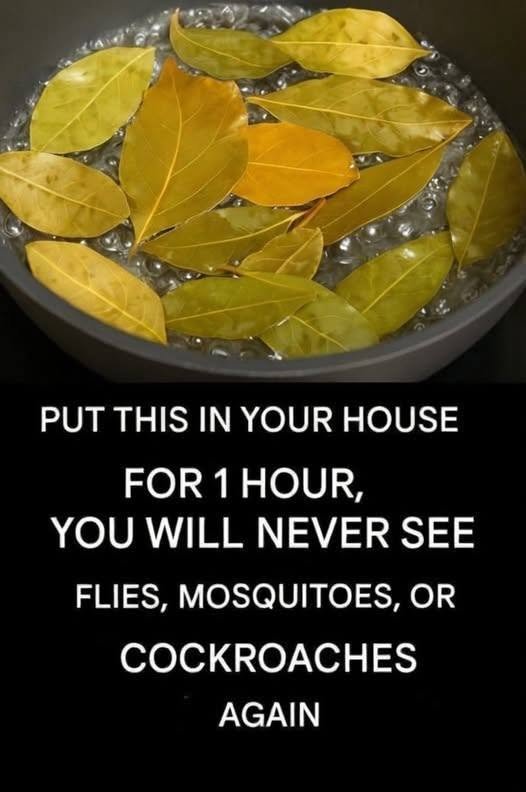
Say Goodbye to Flies, Mosquitoes and Cockroaches by Boiling These Leaves
Natural pest-control ideas are popular because they can be inexpensive and easy to try at home. One common method involves boiling strongly scented leaves and using the resulting water around areas where insects appear.
But there is an important distinction: a homemade leaf infusion may produce a smell that some insects find unpleasant, yet it cannot be guaranteed to eliminate flies, mosquitoes, or cockroaches.
For meaningful pest control, sanitation, removing standing water, sealing entry points, and using appropriate pest-control products are generally more reliable.
Which Leaves Are Commonly Used?
Leaves with strong aromatic compounds are often suggested for homemade insect repellents. Depending on the plant and region, people commonly experiment with bay leaves, mint, eucalyptus leaves, or neem leaves.
Their strong scents come from naturally occurring plant compounds, some of which have demonstrated insect-repellent or insecticidal activity under laboratory conditions.
However, results in a real home can vary considerably.
A boiled-leaf mixture should therefore be viewed as a supplementary household measure, not a replacement for effective pest management.
How to Make a Simple Leaf Infusion
If you want to try an aromatic leaf infusion, keep the preparation simple.
Step 1: Wash the Leaves
Rinse fresh leaves thoroughly to remove dirt and surface contaminants.
Step 2: Simmer in Water
Place the leaves in a pot of water and bring the water to a gentle simmer.
Allow them to simmer for several minutes, then turn off the heat and let the mixture cool completely.
Step 3: Strain It
Remove the leaves and allow the liquid to cool before transferring it to a clearly labeled container.
For safety, don’t store homemade mixtures indefinitely. Make small quantities and discard them if they develop an unusual odor, mold, or other signs of spoilage.
How Could the Smell Help?
Many aromatic plants contain volatile compounds that insects can detect.
A strong plant odor may interfere with an insect’s ability to locate food or may discourage it from entering a particular area.
But this does not mean that boiling leaves will kill an established cockroach infestation or prevent mosquitoes from entering your home.
The concentration and composition of the compounds also depend on the plant species, preparation method, and storage conditions.
For Mosquitoes, Remove Their Breeding Sites
If mosquitoes are the main problem, one of the most useful things you can do is eliminate standing water.
Check places such as:
- Buckets
- Plant saucers
- Unused containers
- Clogged drains
- Outdoor toys
- Gutters
- Water-storage containers
Even small amounts of stagnant water can provide breeding opportunities for mosquitoes.
Keeping window screens intact and using appropriate mosquito protection can also help.
For Cockroaches, Remove Food and Water Sources
Cockroaches are much harder to control with scent alone.
Keep food sealed, clean crumbs and spills promptly, take rubbish out regularly, and fix leaking taps or pipes.
Pay particular attention to kitchens, bathrooms, cracks, and other areas where cockroaches can find food, moisture, or shelter.
If you are seeing cockroaches repeatedly, proper pest-control methods may be necessary.
For Flies, Focus on Sanitation
Flies are attracted to food, rubbish, animal waste, and other organic material.
Keep food covered, clean surfaces regularly, use closed rubbish containers, and avoid leaving food scraps exposed.
A pleasant-smelling boiled-leaf mixture cannot compensate for an accessible food source.
Important Safety Precautions
Natural pest-control mixtures still need to be handled carefully.
Do not drink the preparation or use unidentified plants. Some plants can be poisonous, and correctly identifying a plant is essential.
Don’t spray homemade mixtures directly onto food, dishes, pets, or children’s belongings.
Also avoid mixing homemade plant preparations with bleach, insecticides, or other household chemicals.
The Most Effective Strategy Is Prevention Plus Control
A homemade aromatic infusion may be interesting to try, but successful pest control usually comes from several measures working together:
Remove food sources + remove standing water + reduce hiding places + seal entry points + use appropriate pest-control methods when necessary.
For a persistent infestation, a qualified pest-control professional can help identify the species and choose an appropriate treatment.
Final Takeaway
Boiling aromatic leaves such as bay, mint, eucalyptus, or neem can produce a strongly scented infusion that some people use as a natural insect deterrent. However, there is no reliable guarantee that it will make flies, mosquitoes, or cockroaches disappear.
The most dependable approach is to remove the conditions that attract pests and use proven control methods when an infestation persists.
A natural scent can be an extra measure—but it shouldn’t be mistaken for a complete pest-control solution.
