4 Safer Ways to Improve the Look of Age Spots and Uneven Skin
Dark spots and uneven skin tone are common, and it’s easy to come across homemade remedies promising to erase them overnight.
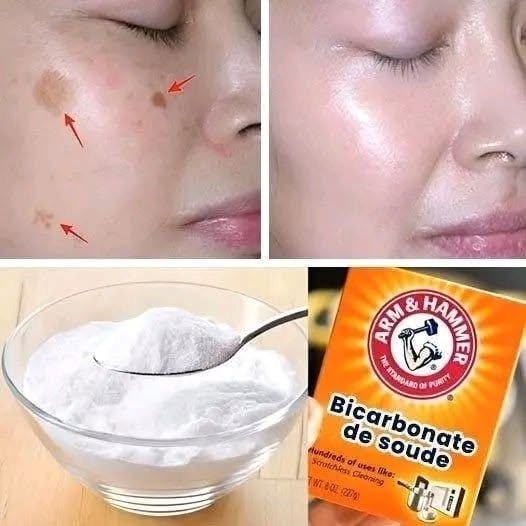
Baking soda is one of the most popular suggestions. But despite its reputation as a household cleaning ingredient, baking soda isn’t a proven treatment for age spots.
In fact, applying it directly to the skin can cause dryness and irritation. Irritated skin can sometimes develop even more noticeable discoloration afterward.
If your goal is healthier-looking, more even skin, there are safer approaches.
1. Protect Your Skin From the Sun
Sun exposure is one of the biggest contributors to persistent pigmentation.
Daily protection can help prevent existing dark spots from becoming more noticeable and can reduce the development of additional sun-related discoloration.
When outdoors, use a broad-spectrum sunscreen with an appropriate SPF, wear protective clothing, and seek shade when practical.
Sun protection is particularly important when you’re already dealing with uneven pigmentation.
2. Keep Your Skincare Routine Gentle
Scrubbing, rubbing, or repeatedly applying harsh household ingredients can damage the skin barrier.
Instead, wash gently and avoid using abrasive scrubs on dark spots.
Baking soda is alkaline and can disrupt the skin’s normal environment, potentially producing dryness, burning, redness, or irritation.
A simple routine that doesn’t constantly irritate the skin is often a better foundation for improving its appearance.
3. Don’t Pick or Scratch Dark Areas
Picking at spots, pimples, scabs, or irritated areas can leave behind darker marks.
Try to let irritated skin heal rather than repeatedly touching or exfoliating it.
If you have acne or another skin condition that is causing new marks, treating the underlying problem is generally more useful than repeatedly trying to remove the resulting discoloration.
4. Get Persistent or Changing Spots Checked
Not every dark spot is an ordinary age spot.
A dermatologist or other qualified healthcare professional can examine pigmentation and determine what it is before recommending treatment.
This is particularly important when a spot:
- Changes in size, shape, or color
- Has an irregular or unusual appearance
- Bleeds or repeatedly crusts
- Becomes painful or persistently itchy
- Looks noticeably different from your other spots
- Appears suddenly without an obvious explanation
Some skin cancers can resemble harmless pigmented spots, so unexplained or changing lesions shouldn’t be treated at home with baking soda or other DIY remedies.
What About Baking Soda?
Baking soda can be useful around the house, but that doesn’t make it a suitable facial treatment.
There is no good evidence that rubbing baking soda onto pigmented skin safely removes age spots.
Its alkaline nature can irritate the skin, particularly when it’s used repeatedly or combined with other harsh ingredients.
The same caution applies to many viral DIY mixtures involving lemon juice, vinegar, toothpaste, or abrasive powders.
“Natural” or homemade doesn’t automatically mean gentle.
What Dermatologists May Use Instead
When a dermatologist confirms that a dark spot is benign and appropriate for treatment, options may include professionally selected topical treatments or procedures.
The right choice depends on the type of pigmentation, the person’s skin, the location of the spot, and the likelihood of irritation or discoloration after treatment.
That’s why identifying the spot correctly comes before trying to remove it.
Final Takeaway
Baking soda isn’t a reliable way to erase age spots, and repeatedly applying it to your skin can cause irritation.
For healthier-looking, more even skin, focus on sun protection, gentle skincare, avoiding unnecessary irritation, and professional evaluation of persistent or changing spots.
The safest skincare “hack” is usually not the harshest ingredient—it is knowing what you’re treating before you try to change it.
