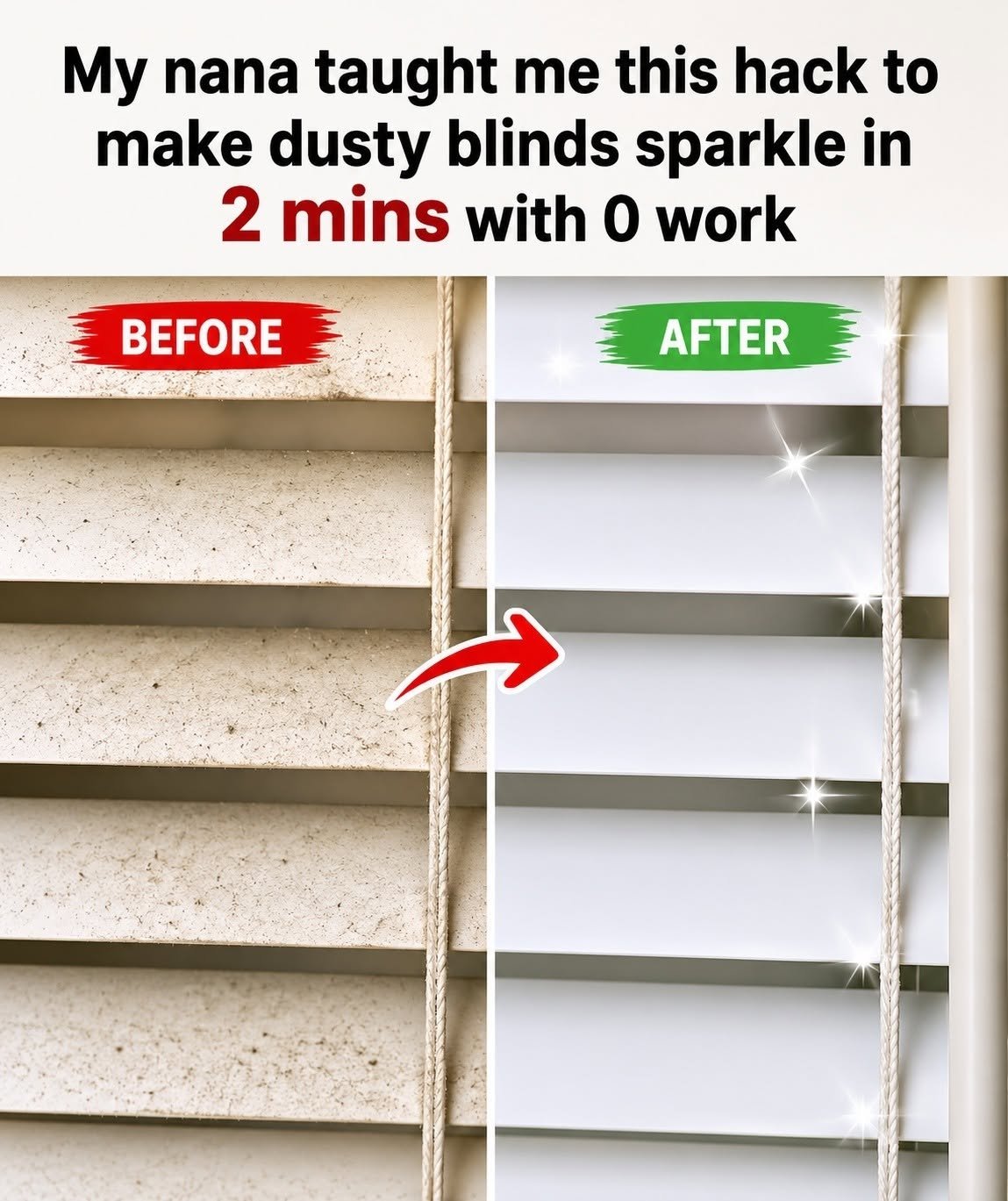
My Nana Taught Me This Hack to Make Dusty Blinds Sparkle in 2 Minutes With Almost No Work
Dusty blinds are one of those household chores that are easy to ignore until sunlight shines directly through the window and suddenly reveals every little layer of dust.
The good news is that you don’t necessarily need to remove the blinds, scrub each slat for ages, or buy a special cleaning gadget.
A simple combination of a clean sock or microfiber cloth, water, and white vinegar can make routine cleaning much quicker for suitable blinds. Similar sock-and-vinegar methods are also recommended by cleaning guides for certain vinyl and other non-wood blinds.
What You’ll Need
You only need a few basic items:
- A clean old sock or microfiber cloth
- A spray bottle
- Water
- White vinegar
For suitable non-wood surfaces, mix equal parts water and white vinegar in the spray bottle.
The important part is not to soak the blinds. Lightly dampen the cloth or sock instead.
Step 1: Close the Blinds
Tilt the slats so they’re closed in one direction.
This makes them much easier to wipe because the slats sit close together rather than moving around individually.
For heavily dusty blinds, remove loose dust first with a dry microfiber cloth or a vacuum cleaner using a brush attachment. This helps prevent you from turning loose dust into wet grime.
Step 2: Put a Sock Over Your Hand
Here’s the clever part.
Slip a clean cotton sock over your hand and use it like a cleaning mitt.
A microfiber cloth works too, but a sock makes it easy to grip individual slats and wipe them without needing a specialized tool.
For particularly fine dust, microfiber is generally preferable because it traps dust effectively.
Step 3: Lightly Dampen the Sock
Spray a small amount of the diluted vinegar solution onto the sock.
It should be damp, not dripping wet.
You don’t need to spray the blinds heavily.
Excess moisture can leave spots and can damage certain materials.
Step 4: Wipe From the Top Down
Start with the uppermost slat.
Gently grip the slat between your fingers and slide the sock along its length.
Continue downward one section at a time.
Working from top to bottom helps prevent dust from falling onto areas you’ve already cleaned.
Step 5: Turn the Slats the Other Way
Once you’ve finished one side, tilt the blinds in the opposite direction and repeat.
This helps you reach the other surface of the slats rather than cleaning only the exposed side.
For ordinary dust, you may not need a cleaning solution at all. A dry microfiber cloth can often handle routine dusting effectively.
Why This Method Works
The trick isn’t really a magical ingredient.
It’s the combination of a slightly damp cleaning surface and the right wiping technique.
The cloth or sock physically picks up dust and grime instead of simply pushing it from one part of the blind to another.
The diluted vinegar can also help with certain surface residues.
For everyday dust, however, the mechanical action of the cloth is doing much of the work.
The Big Warning: Don’t Use Vinegar on Every Blind
This is where many viral cleaning hacks go wrong.
Do not assume a vinegar solution is safe for every type of blind.
Real wood blinds should generally be kept as dry as possible because excessive moisture can damage the finish or the wood. Cleaning guidance commonly recommends dry dusting for wood and using appropriate wood-care products when needed.
If you’re unsure what your blinds are made from, check the manufacturer’s care instructions before using vinegar.
Also be careful with delicate finishes and natural stone surfaces nearby.
Never Mix Vinegar With Bleach
This is an important household-safety rule.
Never mix vinegar with bleach or bleach-containing cleaners.
The combination can produce dangerous gases.
Use one cleaning product at a time and follow the product’s instructions.
What If the Blinds Are Really Dirty?
If the blinds have accumulated grease, fingerprints, or other stubborn grime, dusting alone may not be enough.
For suitable non-wood blinds, a small amount of mild dish soap diluted in water may be appropriate.
Work gently and avoid soaking the slats.
After wiping, use a clean, dry microfiber cloth to remove excess moisture and help prevent water spots.
A Two-Minute Maintenance Habit
The easiest way to keep blinds looking clean isn’t to wait until they’re covered in dust.
Instead, give them a quick dusting regularly.
A few minutes every week or two can prevent the heavy buildup that makes deep cleaning so annoying.
You can also use a vacuum’s brush attachment for loose dust before wiping.
What About Fabric Blinds?
Fabric blinds require different care.
You shouldn’t automatically treat fabric like vinyl or metal.
Depending on the material, some fabric blinds may need to be removed and cleaned according to their care instructions.
Always check the manufacturer’s recommendations before applying liquid cleaners.
The Real Secret to Sparkling Blinds
The viral version of this hack makes it sound as though one special mixture does all the work.
The more useful lesson is actually much simpler:
Use the right cloth, remove loose dust first, work from top to bottom, avoid excess moisture, and match the cleaning method to the material.
That’s what makes the job fast.
Final Takeaway
For suitable non-wood blinds, a clean sock or microfiber cloth lightly dampened with a 1:1 water-and-white-vinegar solution can be a quick way to remove everyday dust and surface grime.
But don’t soak the blinds, don’t use vinegar blindly on every material, and keep wooden blinds as dry as possible.
The best cleaning hack isn’t necessarily the strongest cleaner.
It’s finding a simple method that removes the dust without creating a new problem.
