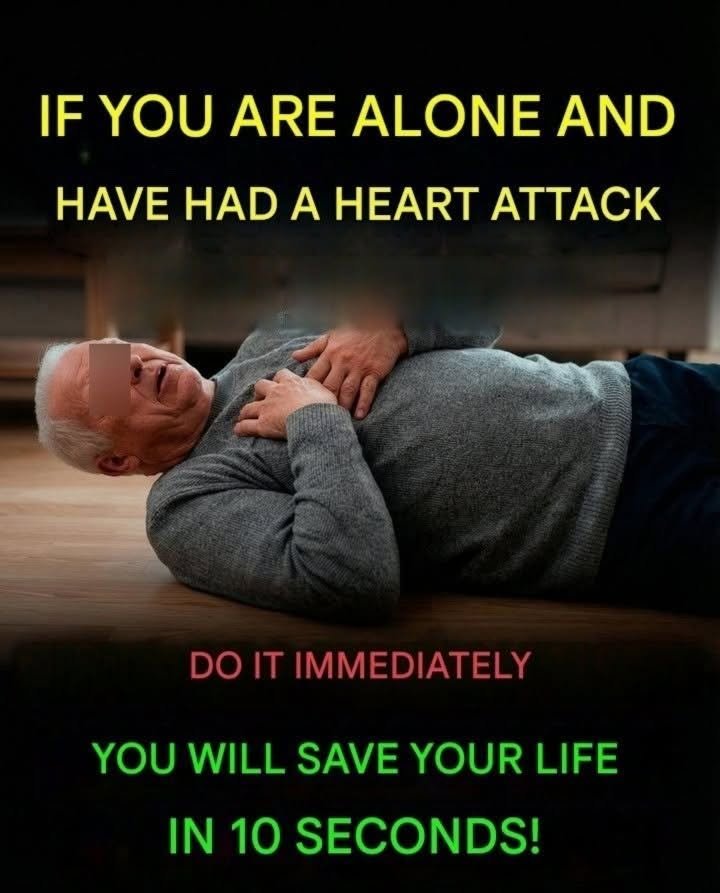
If You’re Alone During a Heart Attack, These Immediate Steps Could Save Your Life
A suspected heart attack is a medical emergency. If you are alone and develop symptoms that could indicate a heart attack, the most important thing is to get emergency medical help immediately—not to try to treat the problem yourself.
1. Recognize the Warning Signs
Heart attack symptoms can vary, but common warning signs include:
- Pressure, squeezing, fullness, or pain in the center of the chest
- Pain or discomfort spreading to the arm, shoulder, back, neck, jaw, or upper abdomen
- Shortness of breath
- Cold sweating
- Nausea or vomiting
- Unusual weakness, dizziness, or lightheadedness
- A feeling that something is seriously wrong
Some people, particularly women, older adults, and people with diabetes, may have less typical symptoms.
2. Call Emergency Services Immediately
Don’t wait to see whether the symptoms disappear.
Call your local emergency medical service and clearly state that you may be having a heart attack. Give your exact location and follow the dispatcher’s instructions.
If you are in Pakistan, the appropriate emergency number can vary by area, so use your local emergency medical service or the emergency number available in your area.
Why Calling Is So Important
Emergency medical teams can begin assessment and treatment before you reach the hospital. An ambulance is generally safer than attempting to drive yourself.
3. Unlock Your Door If You Can Do So Safely
If you’re at home and able to do it without delaying the emergency call, unlock the main door.
This can make it easier for emergency responders to reach you if you become too weak or lose consciousness.
Then sit or lie somewhere safe and keep your phone nearby.
4. Sit Down and Stay as Calm as Possible
Stop whatever you’re doing.
Sit in a comfortable position, preferably somewhere where you won’t fall if you become dizzy. Avoid unnecessary walking, climbing stairs, or physical exertion.
Try to breathe normally while waiting for emergency help.
5. Take Aspirin Only When Appropriate
For some adults with suspected heart attack, emergency medical guidance may recommend chewing an aspirin while waiting for help.
However, aspirin isn’t appropriate for everyone. It may be dangerous for someone with an aspirin allergy, certain bleeding conditions, or other contraindications.
The safest approach when you’re alone is to follow the emergency dispatcher’s instructions. Don’t delay the emergency call while looking for aspirin.
6. Use Your Prescribed Heart Medication as Directed
If you have been prescribed nitroglycerin for angina, use it according to the instructions your doctor gave you.
Don’t take someone else’s heart medication, and don’t take additional doses beyond your prescribed instructions.
7. Don’t Drive Yourself to the Hospital
Even if symptoms seem manageable, driving yourself can be dangerous because your condition could suddenly worsen.
An ambulance allows medical professionals to monitor you and respond if your condition changes during transportation.
8. Don’t Try Internet “Heart Attack Tricks”
Avoid relying on unproven techniques such as:
- Forceful coughing to “stop” a heart attack
- Drinking large amounts of water
- Taking random supplements
- Exercising to “get the blood flowing”
- Waiting for symptoms to disappear
- Taking someone else’s prescription medication
These approaches can delay proper emergency treatment.
9. If You Become Unconscious
If you’re alone and become unconscious, you cannot perform CPR on yourself. This is another reason calling emergency services immediately is so important.
If another person arrives and finds you unresponsive and not breathing normally, they should follow the emergency dispatcher’s instructions, begin CPR, and use an automated external defibrillator (AED) if one is available.
10. Don’t Assume Chest Pain Is “Just Indigestion”
Heart attack symptoms can sometimes resemble indigestion, heartburn, anxiety, or muscle pain.
You don’t need to determine the exact cause yourself. If symptoms are new, severe, persistent, or concerning—particularly chest pressure accompanied by sweating, shortness of breath, nausea, or pain spreading to the arm, jaw, back, or shoulder—seek emergency medical attention immediately.
What to Remember If You’re Alone
The simplest emergency plan is:
Recognize → Call → Sit safely → Follow the dispatcher → Wait for help.
The biggest mistake is waiting too long to seek medical attention. If you think you may be having a heart attack, treat it as an emergency rather than trying to diagnose or manage it yourself.
