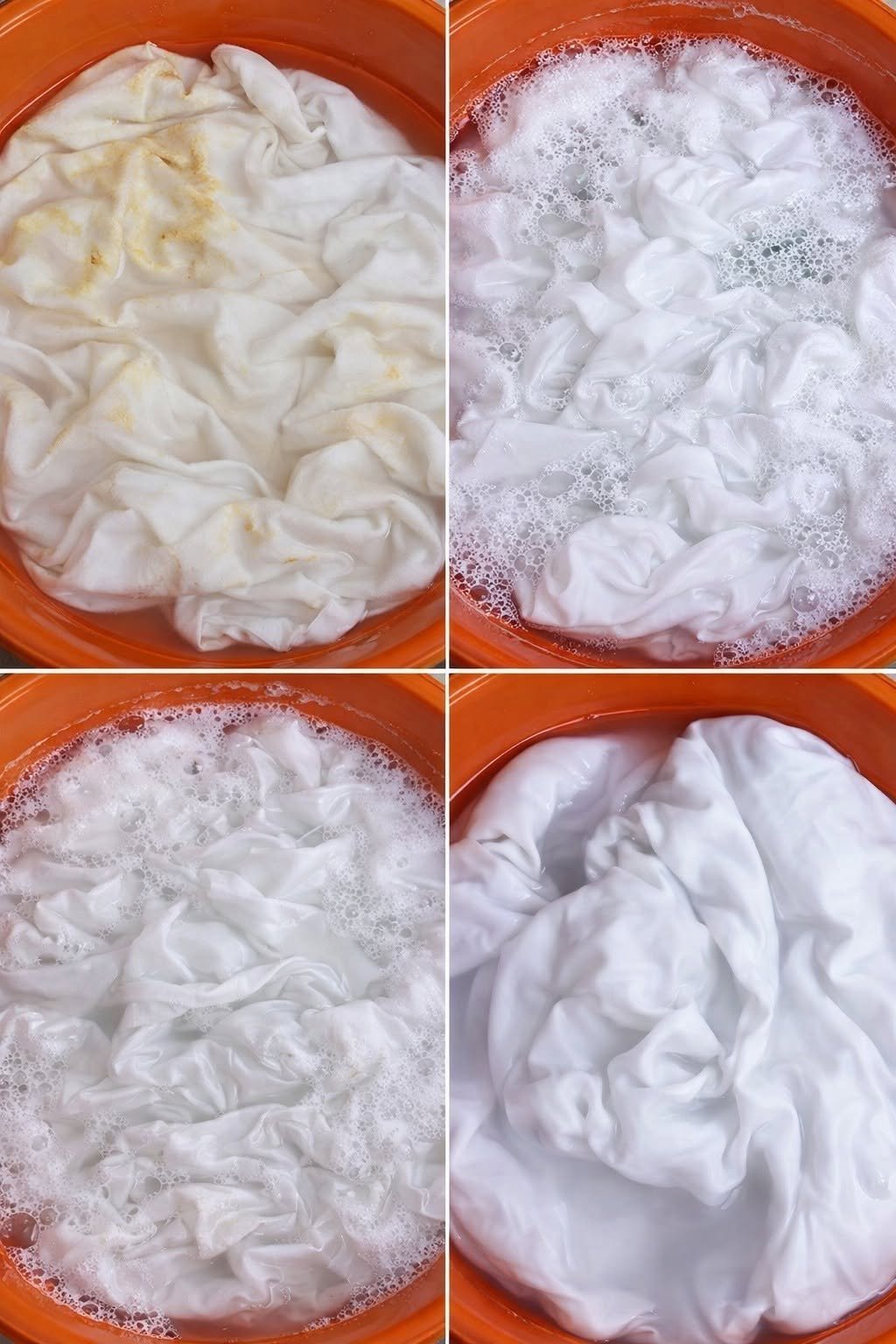
🧺 I Poured Vinegar on My Towels Just to Test a Rumor… and What Happened Next Made Me Realize How Simple Tricks Can Be Pure Genius
Have you ever washed your towels only to discover that they still smell a little musty or feel strangely stiff? They may look perfectly clean, yet somehow they don’t have that fresh, soft feeling you expect.
That’s why the old white vinegar laundry trick has attracted so much attention. Some people swear that vinegar can help refresh towels and remove the buildup that develops after repeated washing.
So, what actually happens when you use vinegar on towels?
The answer is more interesting than simply saying, “Vinegar makes towels soft.”
🧴 Why towels can become stiff and unpleasant
Towels are constantly exposed to water, soap, body oils, and moisture. Over time, residues can become trapped between their fibers.
Using too much detergent can contribute to buildup, particularly if the washing machine is overloaded or doesn’t rinse thoroughly. Hard water can also leave behind minerals.
Eventually, a towel may start feeling:
- Rough instead of fluffy
- Heavy rather than light
- Less absorbent
- Slightly waxy or coated
- Musty even after washing
This doesn’t necessarily mean the towel is dirty. Sometimes, residue is the problem rather than a lack of detergent.
🍶 What vinegar can actually do
White vinegar contains acetic acid, which gives it its characteristic sour smell and acidic properties.
When used appropriately in laundry, vinegar may help loosen certain mineral and detergent residues and can help reduce some unwanted odors.
That can make a noticeable difference in the way a towel feels after washing.
However, vinegar isn’t a magical cleaning solution. It doesn’t repair worn-out fibers, restore permanently damaged towels, or eliminate every possible source of odor.
✨ Why the towel may feel different
Imagine that the individual fibers of a towel have gradually collected a layer of residue.
After washing, some of that residue may remain behind. The fibers can feel less flexible and may not absorb water as effectively.
Reducing that buildup can allow the fibers to feel more natural again.
That’s why the result can seem surprisingly dramatic: the towel wasn’t necessarily dirty—it may simply have had too much residue trapped in it.
🧺 Don’t make the mistake of using more detergent
It might seem logical that an unpleasant-smelling towel needs extra detergent.
But more isn’t always better.
Excess detergent can be difficult to rinse away completely, especially when the washing machine is packed with towels.
Instead, follow the detergent manufacturer’s recommended amount and avoid cramming too many towels into a single load.
Giving the towels enough room to move around helps water and detergent circulate properly.
🌬️ Drying is just as important
There’s another simple part of the trick that often gets overlooked.
Towels need to dry thoroughly.
A wet towel left in a pile for a long time can develop an unpleasant musty smell. Washing it again won’t necessarily solve the underlying problem if it continues sitting damp afterward.
After using a towel, spread it out or hang it somewhere with good airflow.
And after washing, make sure it becomes completely dry before folding it and putting it away.
⚠️ An important vinegar warning
Don’t assume that because vinegar is a common household ingredient, it’s automatically suitable for every washing machine or fabric.
Some washing-machine manufacturers advise against routinely using vinegar because its acidity may affect certain rubber components over time.
Check your washing machine’s care instructions before making vinegar a regular part of your laundry routine.
And there’s one rule that’s especially important:
🚫 Never mix vinegar with chlorine bleach.
Combining vinegar with chlorine bleach can release dangerous chlorine gas. Keep these products completely separate.
🧼 Vinegar isn’t a replacement for detergent
Another common misconception is that vinegar can replace your normal laundry detergent.
It can’t.
Detergent is designed to remove dirt, oils, and other soils from clothing and fabrics. Vinegar has a different role and isn’t a universal laundry cleaner or disinfectant.
Think of it as a possible tool for dealing with certain residues and odors, rather than a miracle substitute for proper washing.
🏠 A simple towel-care routine
If you want your towels to stay fresher for longer, focus on the basics:
1. Don’t overload the washing machine.
Towels need room to move freely.
2. Use the correct amount of detergent.
More detergent doesn’t automatically mean cleaner towels.
3. Rinse thoroughly.
Residue left behind can contribute to stiffness.
4. Avoid leaving wet towels in a heap.
Give them plenty of airflow.
5. Dry towels completely.
Don’t fold and store them while they’re still damp.
6. Wash them according to their care labels.
Different fabrics can have different requirements.
7. Clean the washing machine periodically.
If several loads develop a persistent musty odor, the machine itself may need cleaning.
🤔 So, was the rumor actually true?
There is some truth behind it—but the internet often makes the result sound more dramatic than it really is.
Vinegar may help with certain mineral or detergent residues and some odors, which can make towels feel fresher and less coated.
But the biggest lesson is actually much simpler:
Good laundry results often come from removing buildup and controlling moisture, not from adding more and more cleaning products.
⭐ Bottom Line
If your towels are clean but somehow stiff, dull, or musty, the problem may be detergent residue, hard-water minerals, or poor drying.
Vinegar can sometimes help with certain types of buildup, but it isn’t a guaranteed miracle treatment. Use it cautiously, follow your washer and towel-care instructions, and never mix it with bleach.
Sometimes the simplest household tricks really can be useful—but knowing why they work is what makes the trick genuinely clever.
