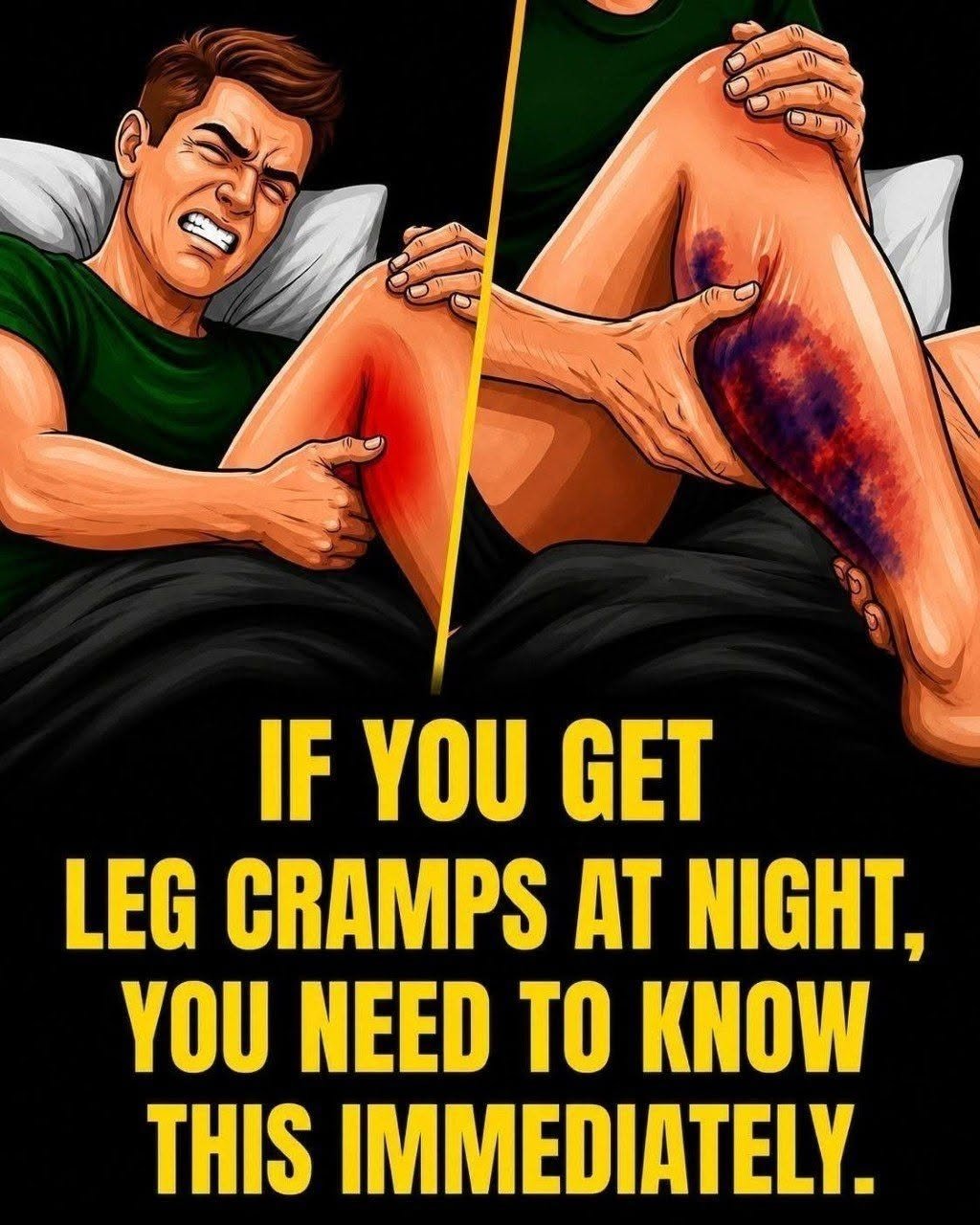
Don’t Ignore Leg Cramps at Night: Here’s What You Should Know
Waking up with a sudden, painful tightening in your calf or foot can be alarming. Nighttime leg cramps are common, especially in older adults, and are often harmless. However, frequent or severe cramps can sometimes be linked to medications, circulation problems, nerve disorders, or other health conditions.
What Are Nighttime Leg Cramps?
A nighttime leg cramp is a sudden, involuntary contraction of a muscle, usually in the calf, foot, or thigh. The muscle can feel hard or knotted, and the pain may last from several seconds to a few minutes. Tenderness can sometimes remain afterward.
Common Reasons They Happen
1. Muscle Overuse or Fatigue
Strenuous exercise, prolonged walking, or standing for long periods can leave muscles tired and more susceptible to cramping.
2. Dehydration
Not getting enough fluids may contribute to muscle cramps, particularly after sweating or physical activity.
3. Prolonged Inactivity
Sitting for extended periods or remaining in one position can be associated with nighttime cramps.
4. Certain Medications
Some medications can contribute to muscle cramps in some people. If cramps started after beginning a new medicine, discuss the timing with your healthcare professional rather than stopping the medication yourself.
5. Pregnancy and Aging
Leg cramps can occur during pregnancy and become more common with age.
6. Underlying Health Conditions
Recurring cramps can sometimes occur alongside conditions affecting the nerves, kidneys, thyroid, muscles, or circulation. This doesn’t mean that cramps automatically indicate one of these diseases, but persistent symptoms deserve evaluation.
What to Do When a Cramp Strikes
When the muscle suddenly tightens:
-
Gently stretch the affected muscle.
-
For a calf cramp, straighten the leg and gently pull the toes toward you.
-
Massage the muscle lightly.
-
Stand up and walk slowly if you can do so safely.
-
Applying gentle warmth may help the muscle relax.
Avoid forceful stretching or aggressive massage if it significantly increases the pain.
How to Reduce Nighttime Cramps
You can try:
-
Staying adequately hydrated throughout the day.
-
Gently stretching your calves before bedtime.
-
Maintaining regular, moderate physical activity.
-
Avoiding sudden increases in exercise intensity.
-
Taking breaks from prolonged sitting.
-
Reviewing possible medication triggers with your healthcare professional.
Don’t routinely take magnesium, potassium, calcium, or other supplements specifically for cramps without discussing them with a healthcare professional. Supplements aren’t appropriate for everyone and can sometimes cause harm.
When Should You Be Concerned?
Make a medical appointment if your cramps are frequent, severe, worsening, repeatedly disturbing your sleep, or accompanied by persistent weakness, numbness, swelling, or pain.
Seek urgent medical attention if leg pain occurs with significant swelling, redness or warmth, particularly if it develops suddenly, or if you develop chest pain, sudden shortness of breath, or difficulty breathing.
The Bottom Line
An occasional nighttime leg cramp is usually not a reason to panic. But repeated or unusual cramps shouldn’t simply be dismissed. Paying attention to hydration, stretching, activity, medications, and accompanying symptoms can help identify possible triggers and determine when medical evaluation is appropriate.
