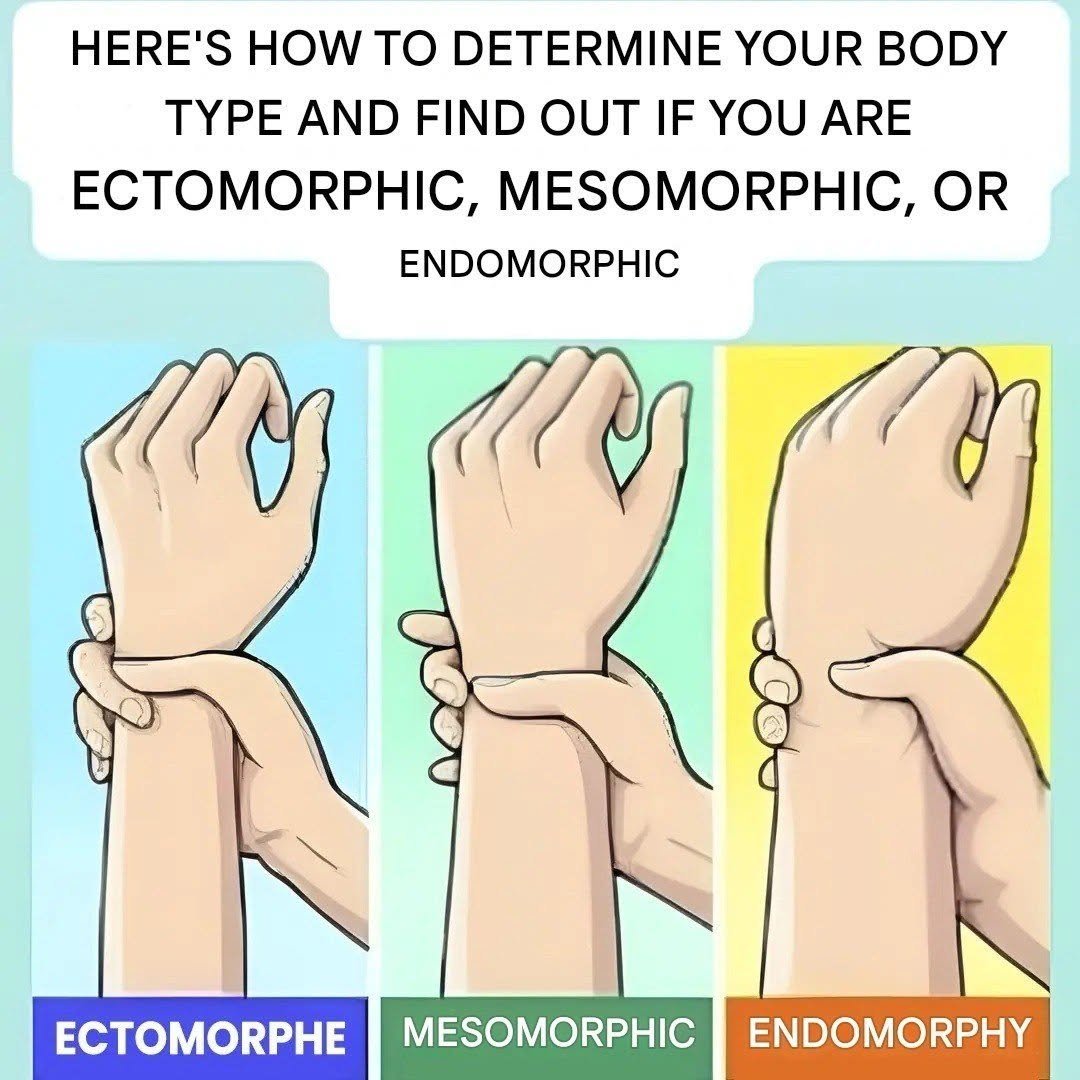
Are You an Ectomorph, Mesomorph, or Endomorph?
You may have heard people describe themselves as an ectomorph, mesomorph, or endomorph. These terms come from an older body-classification system called somatotypes.
They can be an interesting way to describe general body shapes, but there’s an important catch: modern science does not consider these three categories a precise way to determine metabolism, fitness potential, or what someone “should” eat or do. Most people fall somewhere between the categories.
🧍 1. Ectomorph
Traditionally described as someone with:
- A naturally narrower frame
- Relatively long, slender limbs
- Less overall body mass
- Difficulty gaining muscle or weight
However, being naturally slim doesn’t automatically mean someone has a particularly fast metabolism. Genetics, nutrition, activity, sleep, and many other factors influence body composition.
Making the most of it: Focus on adequate nutrition, regular strength-building activity, and overall health rather than trying to fit a specific body-type formula.
💪 2. Mesomorph
Traditionally described as someone with:
- A naturally more muscular-looking build
- Broader shoulders
- Easier muscle development
- A relatively athletic appearance
But having this appearance doesn’t guarantee greater strength or athletic ability. Training and experience still matter enormously.
Making the most of it: Choose activities you enjoy and gradually build strength, endurance, balance, and coordination.
🧍♀️ 3. Endomorph
Traditionally described as someone with:
- A rounder or softer natural build
- Greater tendency to carry body fat
- A broader frame
It’s important not to interpret this label as meaning that someone is unhealthy or has a “bad” metabolism. Body size and shape naturally vary considerably between individuals.
Making the most of it: Concentrate on nutritious foods, regular physical activity, adequate sleep, and habits that support health rather than trying to force your body into a particular shape.
🔎 So Which One Are You?
You don’t necessarily have to choose one.
Someone can have a relatively narrow frame but develop considerable muscle through training. Another person can have a naturally broader frame while also becoming very fit. Real human bodies don’t fit neatly into three boxes.
Your body composition can also change throughout life because of growth, puberty, activity, nutrition, aging, and other factors.
🌱 The Most Useful Approach
Instead of asking “Which body type am I?”, a more useful question is:
“What habits help me feel strong, energetic, and healthy?”
Regular movement, enjoyable physical activities, nutritious meals, sufficient sleep, and appropriate strength-building are useful regardless of whether someone resembles an ectomorph, mesomorph, or endomorph.
Bottom line: Somatotypes can be a fun way to talk about broad differences in body shape, but they shouldn’t determine your diet, exercise routine, or how you feel about your body. There is no single ideal body type.
