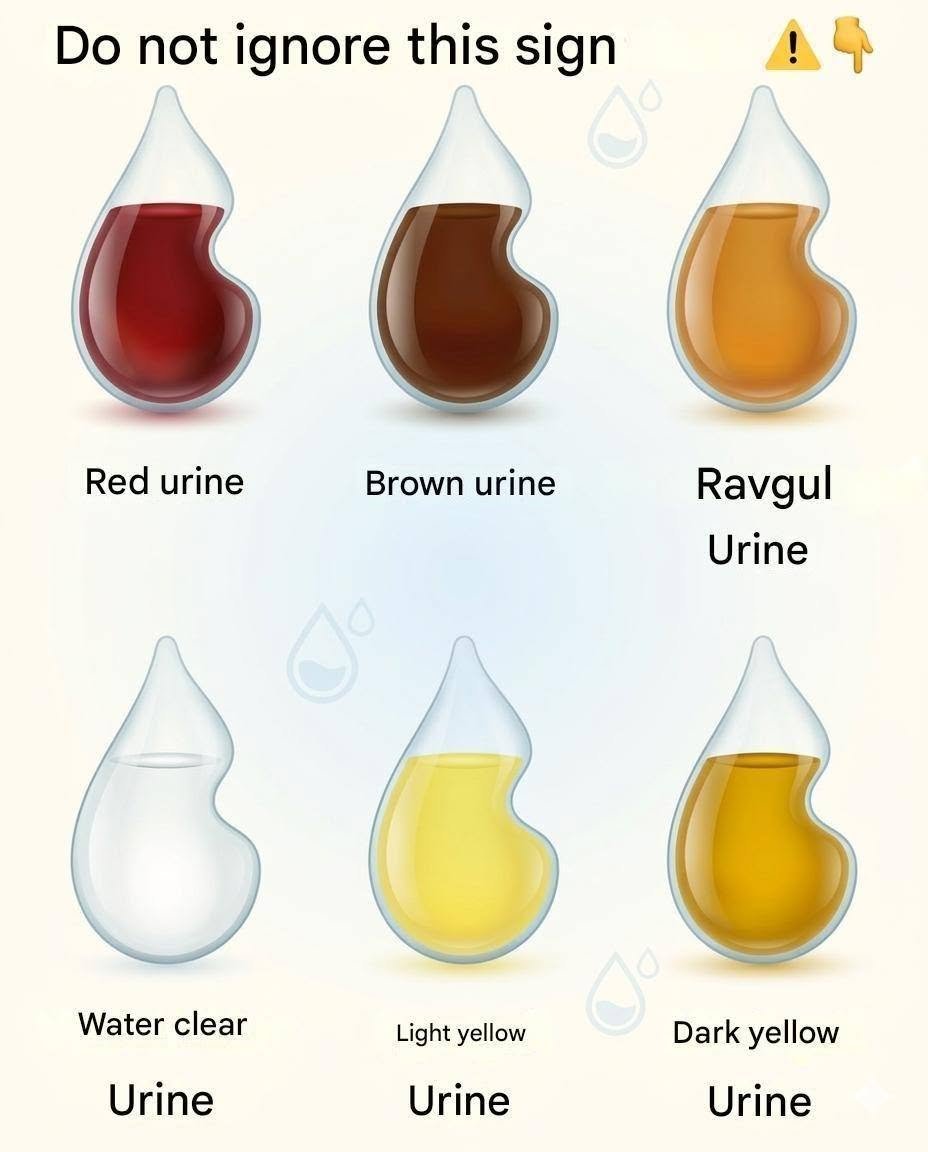
What Does the Color of Your Urine Say About Your Health? 💧
Urine color can sometimes give you useful clues about hydration, foods, medications, and certain health conditions. But color alone can’t diagnose a disease. Changes that persist or occur alongside other symptoms deserve medical attention.
🟡 Pale Yellow — Usually Normal
Pale straw or light yellow urine is generally consistent with good hydration.
The yellow color comes largely from urochrome, a pigment produced as your body breaks down certain substances.
💧 Very Clear — You May Be Drinking a Lot
Completely clear urine can occur when you’re drinking a large amount of fluid.
Occasionally having clear urine isn’t usually concerning, but consistently producing very large amounts of nearly colorless urine—especially with excessive thirst or frequent urination—should be discussed with a healthcare professional.
🟨 Dark Yellow or Amber — Possible Dehydration
Darker yellow urine is often a sign that your urine is more concentrated.
You may notice this after:
-
Sweating heavily
-
Exercising
-
Not drinking enough fluids
-
Waking up after several hours without drinking
Drinking fluids normally should gradually make the urine lighter.
🟠 Orange — Several Possible Causes
Orange urine can occur with dehydration, certain medications, or some medical conditions affecting the liver or bile ducts.
If orange urine persists or occurs with yellowing of the skin or eyes, pale stools, abdominal pain, or significant illness, seek medical advice.
🔴 Pink or Red — Don’t Ignore It
Red or pink urine can sometimes result from foods such as beetroot, but it can also indicate blood in the urine.
Blood may occur with urinary tract infections, kidney stones, certain kidney conditions, or other problems.
If you can’t clearly explain the color from something you’ve eaten or a medication, contact a healthcare professional for evaluation.
🟤 Brown or Cola-Colored — Needs Attention
Brown urine can occur with severe dehydration, certain medications or foods, but it can also be associated with liver problems or muscle injury.
Persistent brown or cola-colored urine should be medically assessed, particularly if you also have weakness, muscle pain, abdominal symptoms, or yellow skin/eyes.
🟢 or 🔵 Blue/Green — Often Medication or Dye Related
Blue or green urine is uncommon. Certain medications, dyes, supplements, or medical conditions can cause unusual colors.
If you haven’t recently taken something that could explain the change, ask a healthcare professional about it.
☁️ Cloudy or Milky Urine
Cloudy urine can occur because of crystals, mucus, dehydration, or other harmless causes. However, it can also accompany a urinary tract infection, particularly when there’s burning during urination, urgency, frequent urination, pelvic discomfort, or a strong odor.
💊 Medications and Supplements Can Change Urine Color
Some medications and supplements—particularly certain B vitamins—can make urine appear dramatically brighter yellow or orange.
That’s why it’s useful to consider what you’ve recently eaten or taken before assuming a color change means illness.
🚨 When Should You Seek Medical Advice?
Contact a healthcare professional if urine changes persist without an obvious explanation, especially if you notice:
-
Blood or red/pink urine
-
Brown or cola-colored urine
-
Painful urination
-
Fever or chills
-
Severe back or side pain
-
Yellow skin or eyes
-
Significant changes in how frequently you urinate
Sudden severe flank pain, fever with urinary symptoms, or visible blood accompanied by feeling very unwell warrants prompt medical attention.
Bottom Line
For most people, pale yellow urine is a reassuring everyday color. Darker urine often means your urine is concentrated, while unusual colors can have many different causes.
The important point is to look at the color together with your symptoms, medications, diet, and how long the change lasts—not color alone.
