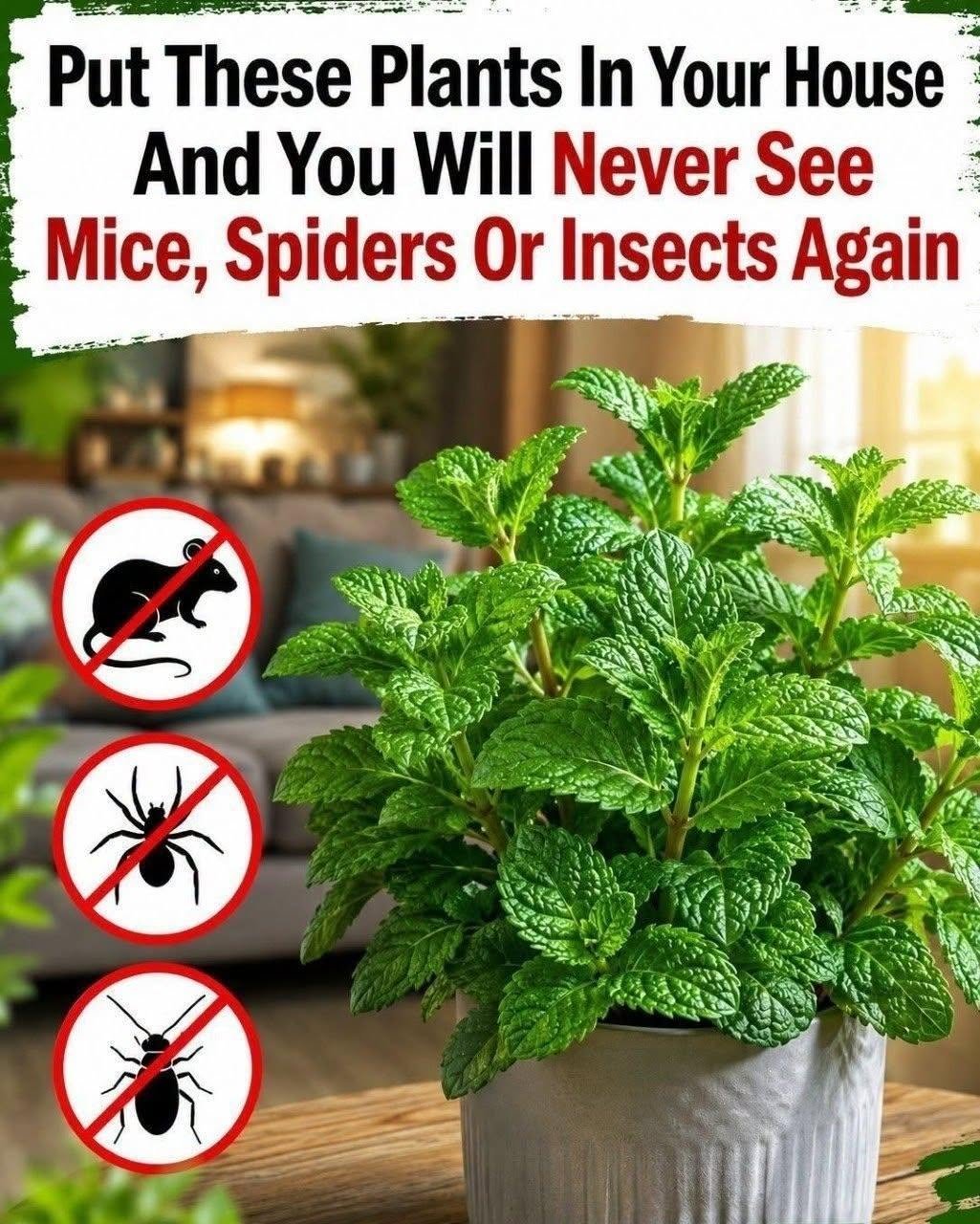
8 Plants That May Help Repel Mice, Spiders & Other Insects 🌿
If you want a more natural approach to keeping unwanted pests away, certain strongly scented plants may help make areas around your home less attractive to some insects or rodents. However, plants aren’t a guaranteed pest-control solution, and they won’t replace sealing entry points or addressing an infestation.
1. 🌿 Peppermint
Peppermint has a strong menthol scent that many people find pleasant but some pests may avoid. Grow it in containers near doors, windows, or patios.
Tip: Keep peppermint in a pot because it can spread aggressively in the garden.
2. 🌱 Lavender
Lavender’s fragrance is associated with repelling certain flying insects, including mosquitoes and moths.
Place pots near sunny windows, entrances, or outdoor seating areas.
3. 🌿 Rosemary
Rosemary has a strong aromatic scent and can be grown outdoors or in containers. It also makes a useful culinary herb.
Give it plenty of sunlight and well-drained soil.
4. 🌱 Basil
Basil’s strong aroma may help discourage some insects, particularly around outdoor living spaces.
Keep basil somewhere warm and sunny, and harvest the leaves regularly to encourage new growth.
5. 🌿 Lemongrass
Lemongrass has a citrus-like scent and is sometimes used to help discourage mosquitoes.
It grows best in warm conditions with plenty of sunlight and moisture.
6. 🌼 Marigolds
Marigolds are popular companion plants because their scent and natural compounds may help deter some garden pests.
They’re easy to grow in sunny areas and can add bright color around patios and garden beds.
7. 🌿 Catnip
Catnip contains nepetalactone, a compound that has demonstrated insect-repellent properties in scientific research.
One warning: catnip can attract cats, so consider where you plant it.
8. 🌿 Eucalyptus
Eucalyptus has a strong aromatic scent and is associated with insect-repellent properties. It generally grows best outdoors in suitable climates and may become a large plant or tree.
🐭 What About Mice?
This is where it’s important to separate popular advice from proven pest control.
Strong-smelling plants such as peppermint may make an area less appealing to rodents temporarily, but planting them around your house is unlikely to solve an established mouse infestation.
For mice, the most effective approach is usually to:
-
Seal holes and gaps around the building.
-
Keep food in tightly sealed containers.
-
Clean up crumbs and food waste.
-
Reduce clutter where rodents can hide.
-
Use appropriate traps or professional pest control when necessary.
🕷️ And What About Spiders?
Spiders enter homes primarily because they can find shelter and food, particularly other insects. Fragrant plants aren’t a reliable way to eliminate them.
Keeping windows screened, sealing cracks, reducing indoor insect populations, and removing webs can be more effective.
🌿 The Bottom Line
Plants such as peppermint, lavender, rosemary, basil, lemongrass, marigolds, catnip, and eucalyptus can be attractive additions to your home and garden, and some contain compounds that may repel particular insects.
But don’t rely on plants alone for pest control. The best long-term strategy is to combine them with good sanitation, sealed entry points, and appropriate pest management.
