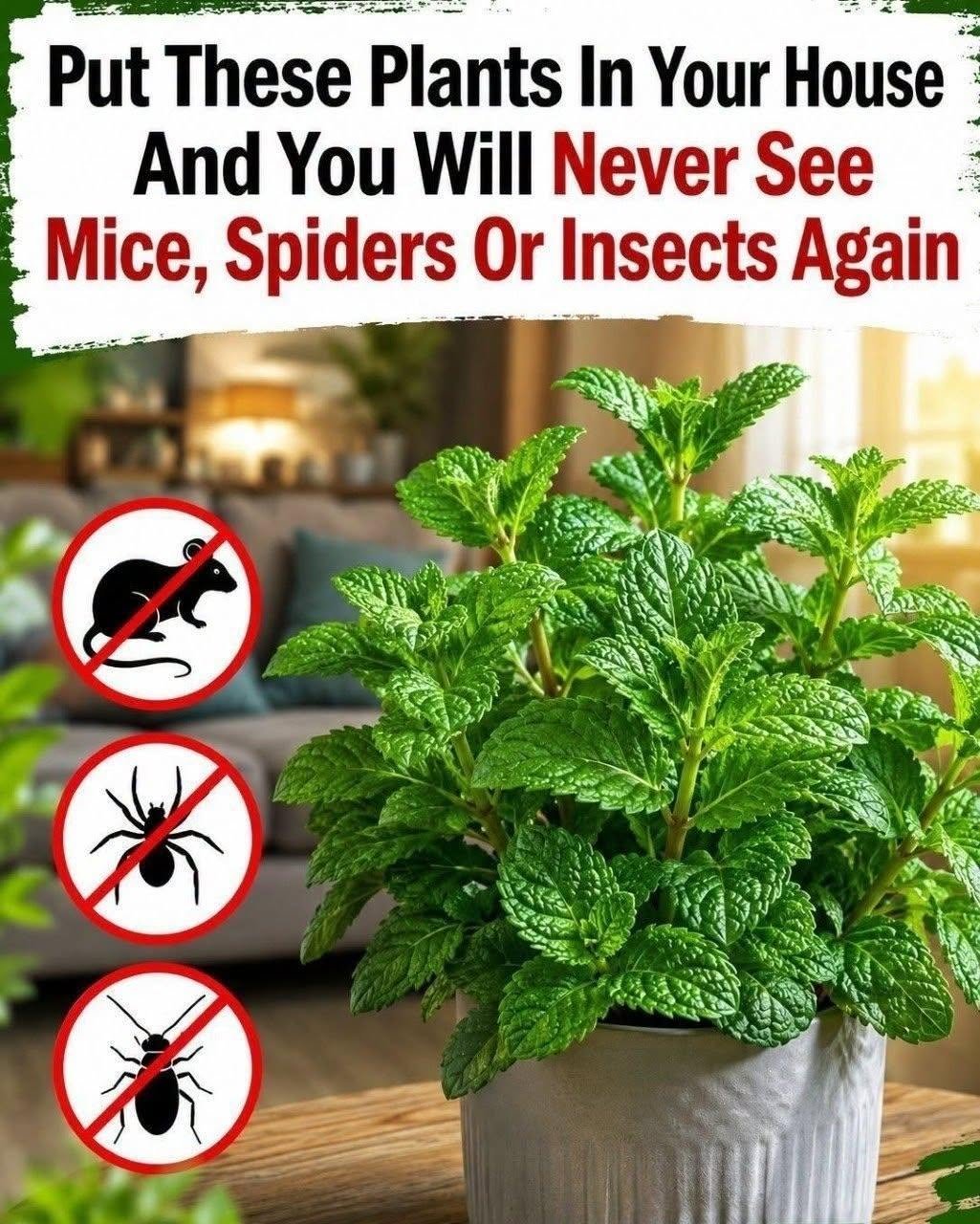
8 Plants That May Help Repel Mice, Spiders & Other Insects 🌿
Want a more natural way to make your home and garden less attractive to unwanted pests? Certain strongly scented plants contain compounds that may discourage some insects and other pests. However, plants aren’t a guaranteed pest-control method, especially for an established infestation.
1. 🌿 Peppermint
Peppermint has a strong menthol scent that may discourage some insects and rodents. Grow it in pots near doors, windows, patios, or other areas where pests tend to appear.
Tip: Keep peppermint contained because it can spread quickly.
2. 💜 Lavender
Lavender’s distinctive fragrance may help discourage certain insects, including moths and mosquitoes.
It prefers plenty of sunlight and well-drained soil, making it a good option for sunny windowsills, balconies, and gardens.
3. 🌿 Rosemary
Rosemary has a strong aromatic scent and can be useful both as a garden plant and a cooking herb.
Place containers near outdoor seating areas or entrances where the fragrance can be enjoyed.
4. 🌱 Basil
Basil has a strong aroma and is commonly grown near patios and kitchen windows. Its scent may discourage some flying insects.
It needs warmth, sunlight, and regular harvesting to stay productive.
5. 🍋 Lemongrass
Lemongrass has a strong citrus fragrance. Some of its compounds are used in insect-repellent products, although simply growing the plant isn’t equivalent to applying a tested repellent.
It grows best in warm conditions with plenty of sunlight.
6. 🌼 Marigolds
Marigolds are popular in gardens because they add bright color and may help discourage certain garden pests.
Plant them around vegetable beds or in containers near outdoor areas.
7. 🌿 Catnip
Catnip contains nepetalactone, a compound that has demonstrated insect-repellent activity in research.
One important consideration: catnip can attract cats, so choose its location carefully.
8. 🌿 Eucalyptus
Eucalyptus has a powerful aromatic scent, and eucalyptus-derived compounds are used in some insect-repellent products.
Depending on the species and climate, eucalyptus can grow into a large plant, so choose an appropriate location.
🐭 Can These Plants Actually Get Rid of Mice?
Not reliably.
Strong-smelling plants such as peppermint may make an area less appealing to some rodents, but planting them around your home won’t eliminate an established mouse infestation.
For mice, focus on:
-
Sealing holes and gaps around doors, pipes, and walls
-
Storing food in sealed containers
-
Cleaning crumbs and food spills
-
Removing clutter that provides hiding places
-
Using appropriate traps or professional pest control when necessary
🕷️ What About Spiders?
Spiders usually enter homes because they can find shelter and food, particularly other insects. Fragrant plants aren’t a dependable way to eliminate spiders.
You can reduce spider activity by sealing cracks, repairing window screens, reducing indoor insect populations, and regularly removing webs.
🌿 The Bottom Line
Peppermint, lavender, rosemary, basil, lemongrass, marigolds, catnip, and eucalyptus can all be useful additions to a garden, and some contain compounds with pest-repellent properties.
But think of them as one small part of pest prevention, not a guaranteed solution. For persistent mice, spiders, or insect infestations, addressing entry points and using proven pest-control methods is much more effective.
