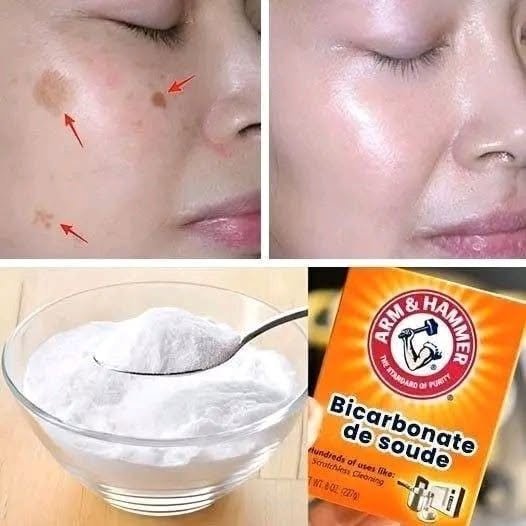
4 Ways to Erase Age Spots With Baking Soda for Younger, More Even Skin
Age spots—also called sun spots or solar lentigines—are common areas of increased pigmentation that develop after years of sun exposure. They are usually harmless, but many people want to make them less noticeable.
You may see baking soda recommended online as a cheap home remedy. However, baking soda has not been proven to erase age spots, and applying it directly to facial skin can cause irritation, dryness, or damage to the skin barrier.
Instead of using baking soda as a bleaching treatment, here are four safer approaches for achieving a more even-looking complexion.
1. Don’t Scrub Age Spots With Baking Soda
Baking soda is alkaline, while healthy skin has a naturally acidic environment. Applying baking soda repeatedly can disrupt the skin barrier.
Scrubbing can also cause irritation, and inflammation may make pigmentation more noticeable, particularly in people whose skin tends to develop dark marks after irritation.
If you’ve already tried baking soda and your skin is burning, stinging, or becoming very red, stop using it and allow the skin to recover.
2. Use Daily Sun Protection
Sun exposure is one of the biggest contributors to age spots and can make existing pigmentation darker.
A broad-spectrum SPF 30 or higher sunscreen can help prevent further sun-related pigmentation. Apply it to exposed skin and reapply when appropriate, especially during prolonged outdoor activity.
Other useful measures include:
- Wearing a hat when outdoors
- Seeking shade during strong sunlight
- Covering exposed skin with clothing
- Avoiding intentional tanning
Sun protection is also important if you’re using a treatment intended to improve pigmentation.
3. Consider Proven Skin-Care Ingredients
Instead of baking soda, products containing certain well-studied ingredients may help improve uneven pigmentation over time.
Depending on your skin and the cause of the pigmentation, a dermatologist may recommend ingredients such as:
- Vitamin C
- Niacinamide
- Retinoids
- Azelaic acid
These products work differently and aren’t appropriate for every person or every type of pigmentation.
Introduce only one new active product at a time, and stop if you develop significant irritation.
4. See a Dermatologist for Persistent Spots
If you want more noticeable improvement, a dermatologist can determine whether the spots really are age spots and discuss treatment options.
Depending on the diagnosis, treatments may include:
- Prescription creams
- Cryotherapy
- Chemical peels
- Laser or light-based treatments
The appropriate treatment depends on your skin type, the appearance of the spots, and whether they have been correctly identified.
Important: Not Every Dark Spot Is an Age Spot
A changing or unusual dark spot shouldn’t simply be treated at home.
See a healthcare professional if a spot:
- Changes in size, shape, or color
- Develops several different colors
- Has an irregular border
- Bleeds or repeatedly crusts
- Becomes persistently painful or itchy
- Looks noticeably different from your other spots
These changes don’t necessarily mean cancer, but they deserve professional assessment.
Bottom Line
Baking soda isn’t a proven way to erase age spots, and rubbing it onto your skin can cause irritation that may make pigmentation worse.
For a more even-looking complexion, focus on daily sun protection, gentle skin care, and evidence-based treatments. If a dark spot is new or changing, have it evaluated rather than trying to remove it at home.
