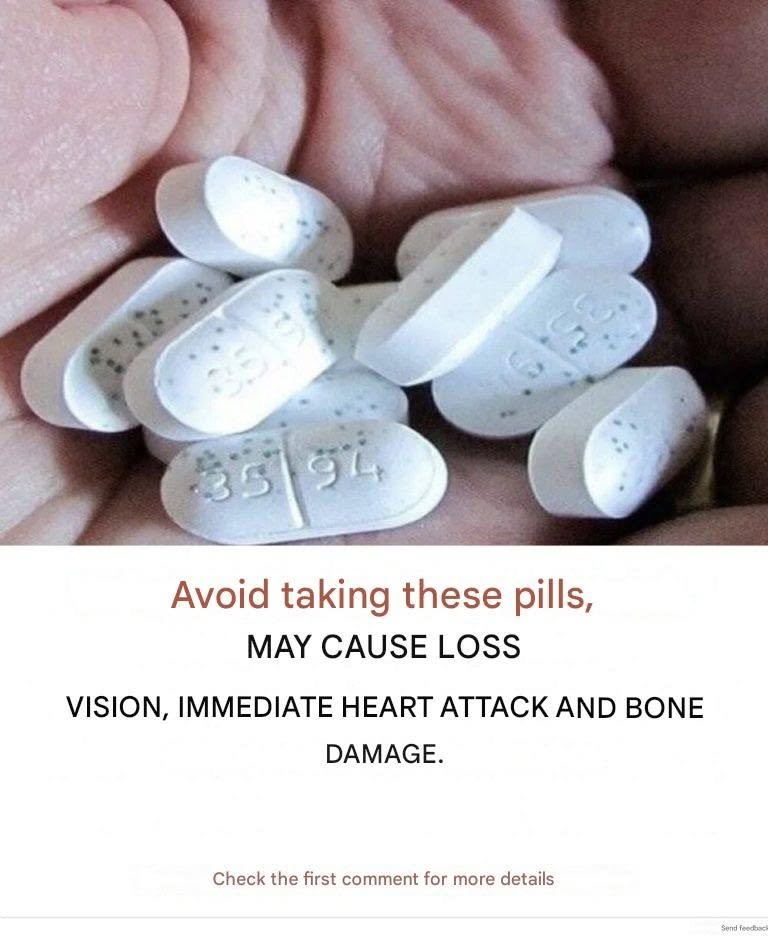
⚠️ WARNING: Some Tablets Can Increase the Risk of Blood Clots and Heart Problems
Certain medicines can increase the risk of blood clots, stroke, or heart attack, but the risk depends heavily on the specific medication, dose, medical condition, and individual risk factors. It would be misleading to say that all tablets—or even all tablets in one broad category—carry the same risk.
Which Medicines Can Be Involved?
1. Estrogen-Containing Hormone Medicines
Some systemic hormone therapies containing estrogen can increase the risk of blood clots, and for some women may increase the risk of heart attack or stroke. The FDA advises discussing individual risks and benefits with a healthcare professional. U.S. Food and Drug Administration+1
2. Some JAK Inhibitors
Certain medicines in the JAK inhibitor class, including tofacitinib, baricitinib, and upadacitinib, carry FDA warnings concerning increased risks of major cardiovascular events and thrombosis in particular patient populations. U.S. Food and Drug Administration
3. Some Estrogen-Containing Contraceptives
Contraceptives containing estrogen can increase the risk of blood clots in some users. The absolute risk varies according to the product and individual factors such as age, smoking, obesity, and previous clotting history. nhs.uk
Don’t Stop a Prescription Suddenly
A medication associated with clotting risk may still provide important benefits. Don’t stop or change a prescribed medicine on your own. Instead, ask your doctor or pharmacist whether your particular medicine is appropriate for you.
Also, don’t assume that a medicine called a “blood thinner” causes clots: anticoagulants such as warfarin, apixaban, and rivaroxaban are specifically used to prevent or treat blood clots. nhs.uk+2
🚨 Know the Emergency Warning Signs
Get emergency medical help for symptoms such as:
-
Sudden chest pain or pressure
-
Sudden difficulty breathing
-
Coughing up blood
-
A swollen, painful, warm, or red leg
-
Sudden weakness or numbness on one side
-
Sudden difficulty speaking or understanding speech
A clot that travels to the lungs can cause a potentially life-threatening pulmonary embolism. nhs.uk
The Important Takeaway
The safest approach is to identify the exact tablet and active ingredient rather than relying on viral lists claiming that certain medicines are universally dangerous. If you give me the name or a photo of the tablet, I can explain its documented clot, stroke, and heart-related risks and the relevant precautions.
