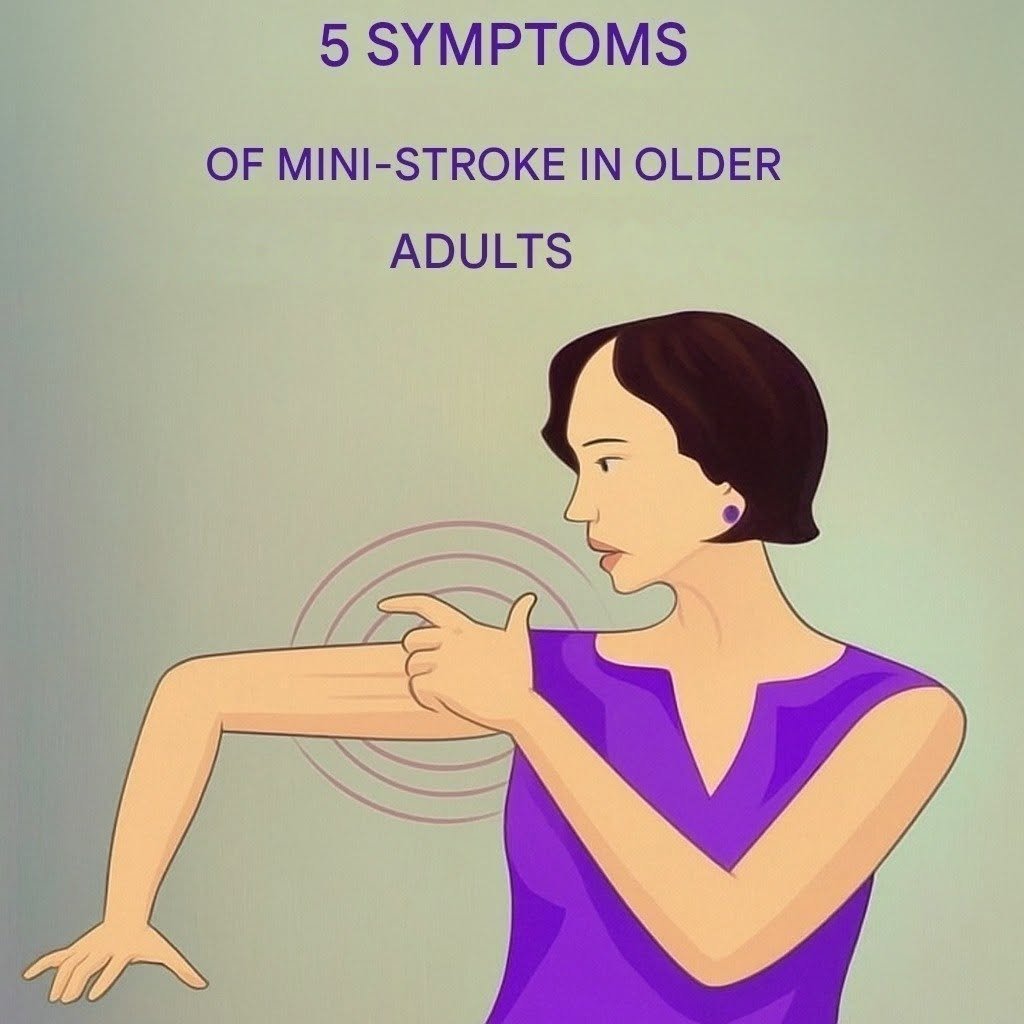
5 Symptoms of a Mini-Stroke in Seniors That Shouldn’t Be Ignored 🚨
A mini-stroke, medically called a transient ischemic attack (TIA), happens when blood flow to part of the brain is temporarily disrupted. The symptoms can disappear within minutes or hours, but that doesn’t make a TIA harmless. It can be a warning sign of a future stroke.
1. 😕 Sudden Trouble Speaking or Understanding
A person may suddenly:
-
Slur their words
-
Struggle to find the right words
-
Have difficulty understanding what others are saying
-
Speak in a way that doesn’t make sense
Even if speech returns to normal quickly, this can be a warning sign of a TIA or stroke.
2. 🙂 Sudden Facial Drooping
One side of the face may suddenly feel weak or numb.
Ask the person to smile. If one side of the mouth droops or the smile looks uneven, seek emergency medical attention.
3. 💪 Sudden Weakness or Numbness
Sudden weakness or numbness—particularly affecting one side of the body—is an important warning sign.
It may involve the:
-
Face
-
Arm
-
Leg
-
Or several areas at once
Don’t wait to see whether the sensation returns to normal.
4. 👁️ Sudden Vision Problems
A TIA can cause sudden changes in vision, such as:
-
Loss of vision in one eye
-
Double vision
-
Blurred vision
-
Difficulty seeing on one side
Sudden unexplained vision changes require urgent medical evaluation.
5. 🚶 Sudden Trouble Walking or Loss of Balance
A person may suddenly become:
-
Unsteady
-
Dizzy
-
Unable to walk normally
-
Poorly coordinated
Particularly when this occurs together with another neurological symptom, it can indicate a stroke or TIA.
🚨 Remember FAST
A useful way to recognize common stroke symptoms is FAST:
-
F — Face: Is one side of the face drooping?
-
A — Arms: Is one arm weak or numb?
-
S — Speech: Is speech slurred or unusual?
-
T — Time: Call emergency medical services immediately.
Other sudden symptoms—especially vision loss, severe dizziness, or difficulty walking—can also occur.
⏰ Don’t Wait for Symptoms to Disappear
This is one of the most important points.
A TIA can resolve before a person reaches the hospital, but you cannot reliably distinguish a TIA from a stroke at home. A person needs urgent medical assessment even if they appear completely normal again.
Note when the symptoms started or when the person was last known to be normal, because timing can affect medical decisions.
🧠 Why a TIA Matters
A TIA may indicate an underlying problem such as a narrowed artery, a blood clot, or an irregular heart rhythm. Identifying and treating the cause can help reduce the risk of a subsequent stroke.
Bottom Line
Sudden facial drooping, one-sided weakness or numbness, speech difficulty, vision changes, or unexplained loss of balance should never be dismissed as “just getting older.”
If these symptoms are happening right now or have just occurred, seek emergency medical care immediately—even if they have already gone away.
