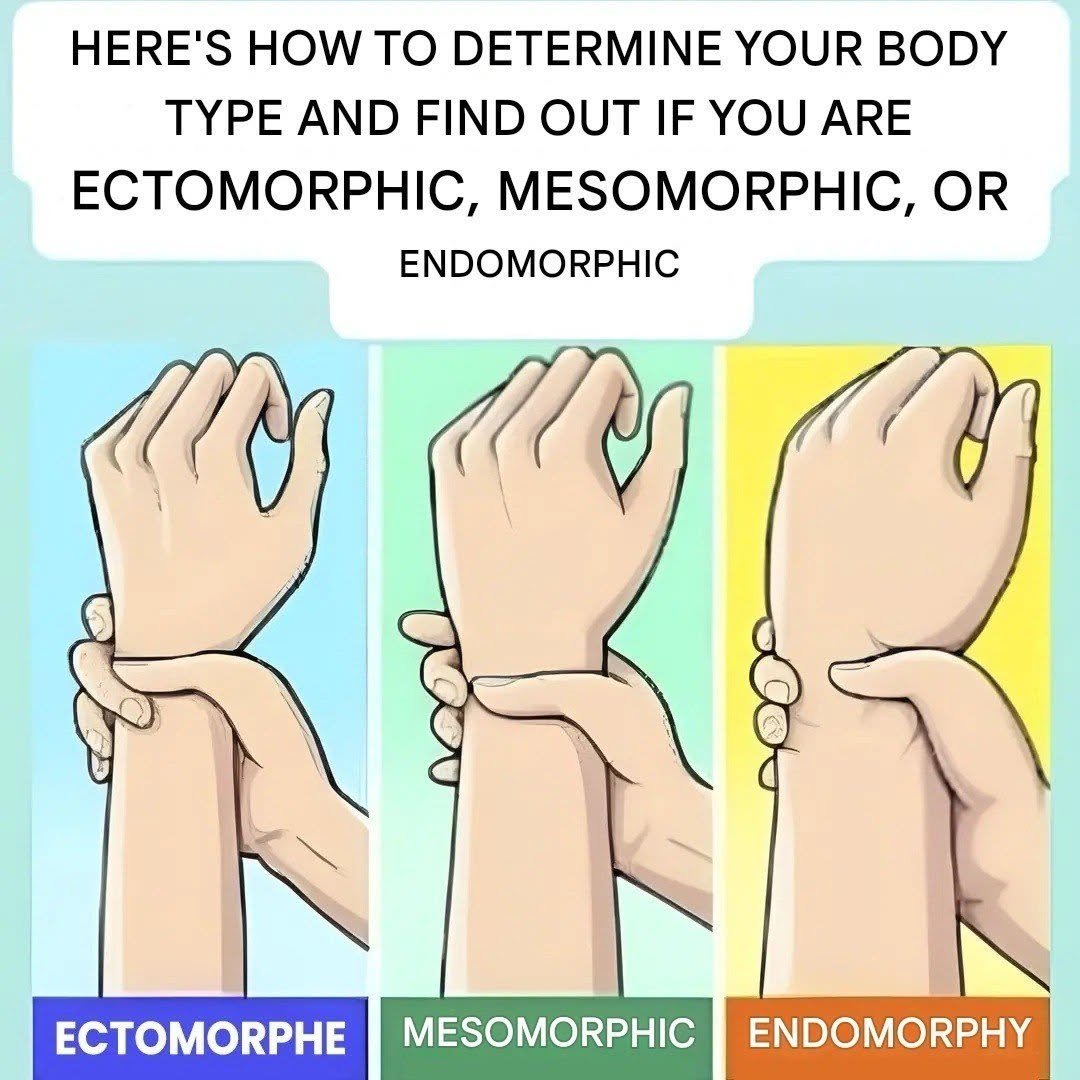
Are You an Ectomorph, Mesomorph, or Endomorph? Discover Your Body Type
You may have heard people describe themselves as ectomorphs, mesomorphs, or endomorphs. These terms come from the somatotype system, which classifies body shapes into three broad categories.
But there’s an important point: modern science does not consider these categories a reliable way to determine metabolism, genetics, or the best diet and exercise plan. Most people are a combination of characteristics rather than fitting neatly into one type.
Still, the framework can be a fun way to think about body shape and training preferences.
1. 🏃 Ectomorph
Traditionally, an ectomorph is described as having a relatively slender build, narrower frame, and less body mass.
People who identify with this description sometimes find it challenging to gain weight or muscle.
If This Sounds Like You
Focus on:
-
Progressive resistance training
-
Adequate protein
-
Enough total calories
-
Nutrient-dense foods such as eggs, dairy, legumes, nuts, whole grains, and lean meats
-
Adequate sleep and recovery
Being naturally slim doesn’t mean you have a “fast metabolism,” however. Body weight is influenced by many factors, including genetics, appetite, activity, sleep, and overall calorie intake.
2. 💪 Mesomorph
The traditional mesomorph description is a more muscular or athletic-looking build, often with relatively broad shoulders and a naturally solid frame.
If This Sounds Like You
A balanced approach can include:
-
Strength training
-
Cardiovascular exercise
-
Adequate protein
-
Plenty of vegetables and fruit
-
Whole grains and other minimally processed foods
-
Appropriate calorie intake for your goals
Having an athletic build doesn’t guarantee that someone will gain muscle easily or stay lean without attention to nutrition and activity.
3. 🥑 Endomorph
Traditionally, an endomorph is described as having a rounder or softer body shape and a greater tendency to carry body fat.
If This Sounds Like You
Helpful habits include:
-
Regular resistance training
-
Walking and other aerobic activity
-
Plenty of protein and fiber
-
Mostly nutrient-dense foods
-
Appropriate portion sizes
-
Consistent sleep
Being described as an endomorph does not mean you’re destined to be overweight. Body composition can change substantially through nutrition, physical activity, and other lifestyle factors.
🧬 Most People Are a Combination
You don’t have to choose just one.
Someone might have a naturally slender frame but develop significant muscle through strength training. Another person might have a broad frame while also carrying relatively little body fat.
Your body isn’t locked into a category.
What Matters More Than Your “Body Type”?
Rather than building your entire diet around a somatotype, consider measurable factors such as:
🎯 Your Goal
Are you trying to gain muscle, lose body fat, improve fitness, or maintain your current weight?
🏋️ Your Training
Progressive resistance training is useful for building and maintaining muscle regardless of body shape.
🍽️ Your Nutrition
Adequate protein, vegetables, fruits, whole grains, healthy fats, and appropriate calorie intake matter more than whether someone labels themselves an ectomorph or endomorph.
😴 Your Recovery
Sleep and recovery influence performance, appetite, and overall health.
The Bottom Line
Ectomorph, mesomorph, and endomorph are broad body-shape descriptions—not medical diagnoses or precise guides to metabolism.
Use them as a fun way to describe general physique characteristics, but don’t let a label determine what you believe your body is capable of. A personalized approach based on your goals, current fitness, nutrition, health, and progress is much more useful.
